Natural Science
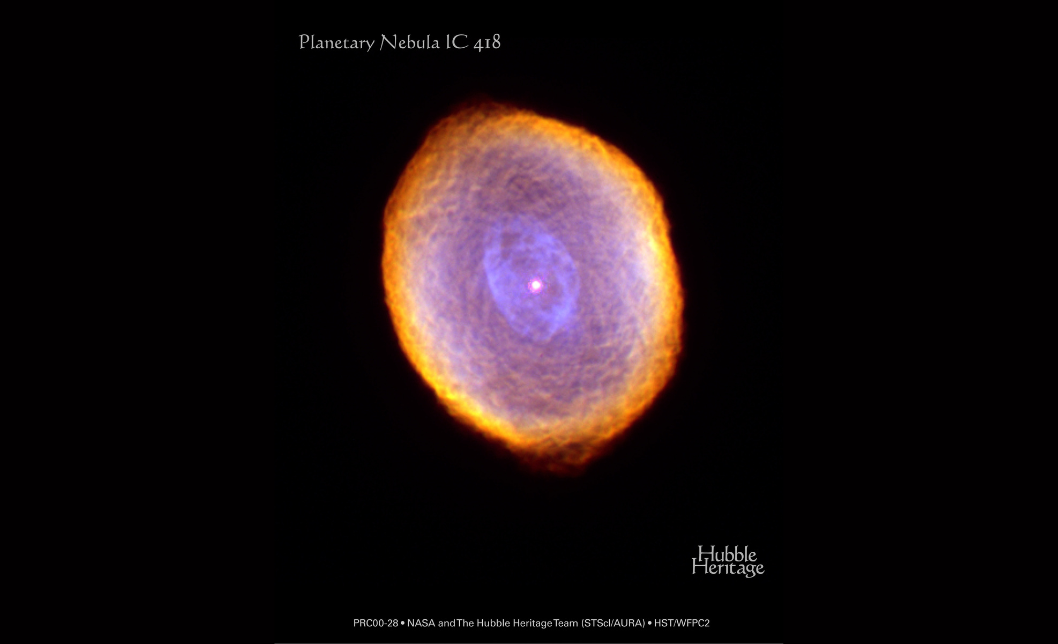
For the first time, the famous “spirograph” Planetary Nebula IC418’s non-explosive stellar evolution has been captured over an unprecedented period of 130 years — almost double the length of a typical human lifetime. These results have recently published in the prestigious Astrophysical Journal Letters^ by Professor Albert Zijlstra, Professor of Astrophysics at The University of Manchester, and Professor Quentin Parker, Director of the Laboratory for Space Research at The University of Hong Kong.
Not only is this a new time record for stellar evolution measured in a Planetary Nebula (PN), or indeed perhaps for any star, and by a significant margin, but the findings carry profound implications for stellar evolution itself. Existing models may need to be revised to account for a slower stellar evolutionary process, and the masses at which carbon stars* can form may also need to be adjusted downward (the PN has evolved from a fairly massive carbon star, challenging current theoretical predictions).
Piecing Together More Than a Century of Observations
IC418 was one of the first PN ever discovered and one of the brightest, most beautiful and easy to study. PN are the ejected glowing shrouds of dying stars, where the gas thrown off in these stellar death throes gets excited and “ionised” by the remnant stellar core. This core is heating up on its way to becoming a so-called white dwarf. White dwarfs typically end up with diameters about the size of the Earth but with a mass about 0.6 times that of our Sun — so both hot and dense. The ionisation from the contracting and heating results in narrow emission lines in the ejected envelope from elements such as Hydrogen, Oxygen, Nitrogen and Sulphur in their optical spectra.
As such, IC418 was also one of the very first to have been observed spectroscopically in 1893, even before photographic plates were used to take permanent records of what astronomers could discern with their naked eyes and even before the elements responsible for some of the emission lines were properly identified. This was the case here for the so-called “Nebulium” lines finally associated with the doubly ionised element Oxygen in 1927.
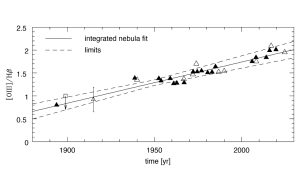
IC418 has fortuitously been observed on a regular basis ever since, decade after decade. This is even as the technology used to make the spectroscopic observations has evolved from human visual measurements to photographic plates, electronic cameras and finally the solid-state CCD detectors we use today. Through careful detective work spanning over 130 years of published observations of IC418, the authors revealed an interesting evolution in key emissions lines in the blue. The ratio of specific emission lines — hydrogen (H-beta) to doubly ionised oxygen ([OIII]) — has changed significantly over the last 130 years, indicating ongoing and measurable evolution in the nebula. It is the fastest such significant evolution over the most-extended period ever seen in a PN or indeed perhaps in any star.
Overcoming Challenges in Tracing the Rapid Evolution of IC418
The careful vetting, evaluation and testing of disparate spectroscopic measurements to obtain as consistent a set of line ratio values as possible over a 130-year time frame was a major challenge, as was the stellar evolutionary models used to try to understand what was going on. A key result of the work is a well-determined heating rate for the star from which it is possible to obtain the residual core mass to good accuracy and from the available initial-to-final mass relations a progenitor mass.
“We believe this research is important because it offers unique, direct evidence of how PN central stars evolve. It will prompt us to rethink some of our existing models of stellar life cycles. It’s been a strong joint effort — collecting, verifying, and carefully analysing more than a century’s worth of astronomical data and then melding that with stellar evolutionary models,” said Professor Parker, one of the two co-authors of the research. “It’s a challenging process that goes far beyond simple observation, and we’re grateful for the opportunity to contribute to our field in this way.”
Professor Zijlstra added, “We often ignore scientific data obtained long in the past. In this case, these data revealed the fastest evolution of a typical star that has been seen directly. The past shows that the skies are not as unchanging as we may think.”
^Link to the Astrophysical Journal Letters: https://doi.org/10.3847/2041-8213/adf62b
Supplementary Information
*About Carbon Star
A carbon star is a luminous, cool, red giant star with an atmosphere that has more carbon than oxygen. Most stars, including our Sun, are oxygen-rich. The carbon abundance facilitates the formation of carbon compounds in the stellar atmosphere, giving it a ruby-red colour. Source: NASA.
Facts about IC418
The Object
R.A. Position 05h 27m 28.2s
Dec. Position -12° 41′ 50.25″
Constellation Lepus Distance: About 2000 light-years
Dimensions: The nebula is about 0.2 light-years or 13,000 AU (18 arcseconds) in diameter
Data Description
Principal Astronomers: R. Sahai and J. Trauger (JPL) A. Hajian (USNO), Y. Terzian (Cornell), B. Balick (Univ. Washington), H. Bond and N. Panagia (STScI)
Instrument: HST WFPC2
Exposure Dates: February 1999, and September 1999,
Exposure Time: 35 minutes Filters: F502N [O III], F656N (Hα), and F658N [N II]
Other Research & Achievements Stories
Achievements and Milestones
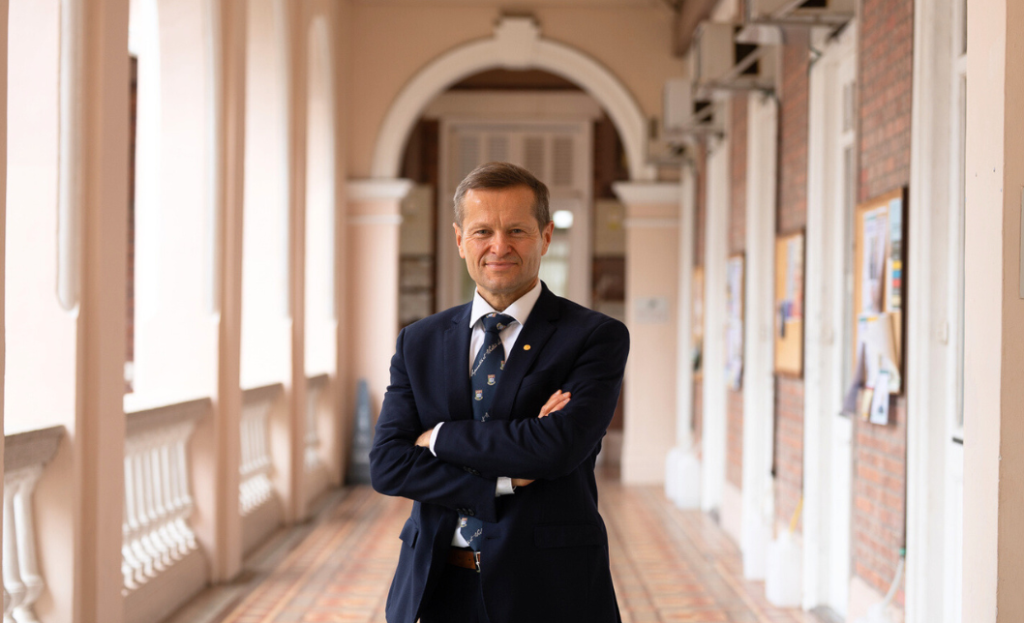
Professor Ferenc Krausz, Nobel Laureate in Physics, joined HKU in November 2025 as Professor, Chair of Laser Physics in the Department of Physics under the Faculty of Science. As a world-renowned authority in ultrafast laser science and quantum optics, Professor Krausz’s appointment will strengthen HKU’s capabilities in cutting-edge research and advance innovations in medical diagnostics worldwide. His joining aligns with HKU’s vision of pursuing academic excellence and advancing knowledge, and it is anticipated that he will make significant contributions to scientific development, benefitting both Hong Kong and the global community. In an exclusive interview, Professor Krausz shared his inspiring journey and insights into the future of scientific discovery.
Natural Science
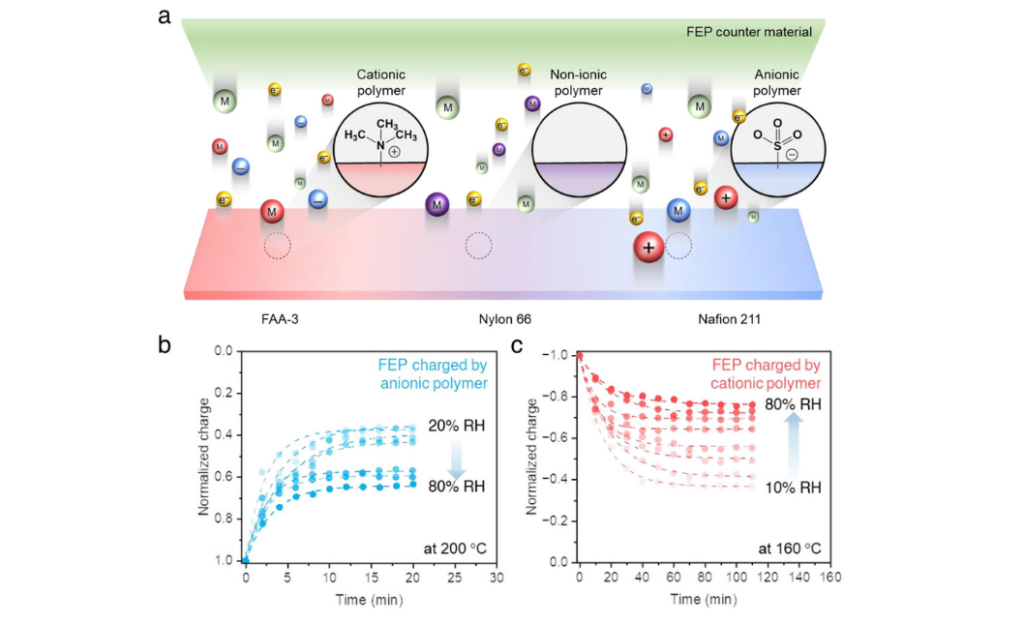
An engineering team at HKU has pioneered the discovery of a new mechanism of ion-driven charge transfer, which provides a deeper understanding of contact electrification phenomena and reveals that electrons and ions transfer simultaneously under changing humidity conditions. This insight will aid in developing new strategies to create materials that work reliably even in humid environments. The findings not only advance fundamental scientific understanding but also open up new possibilities for eco-friendly technologies such as printing, coating, environmental monitoring, and energy harvesting.
Health and Medical Sciences
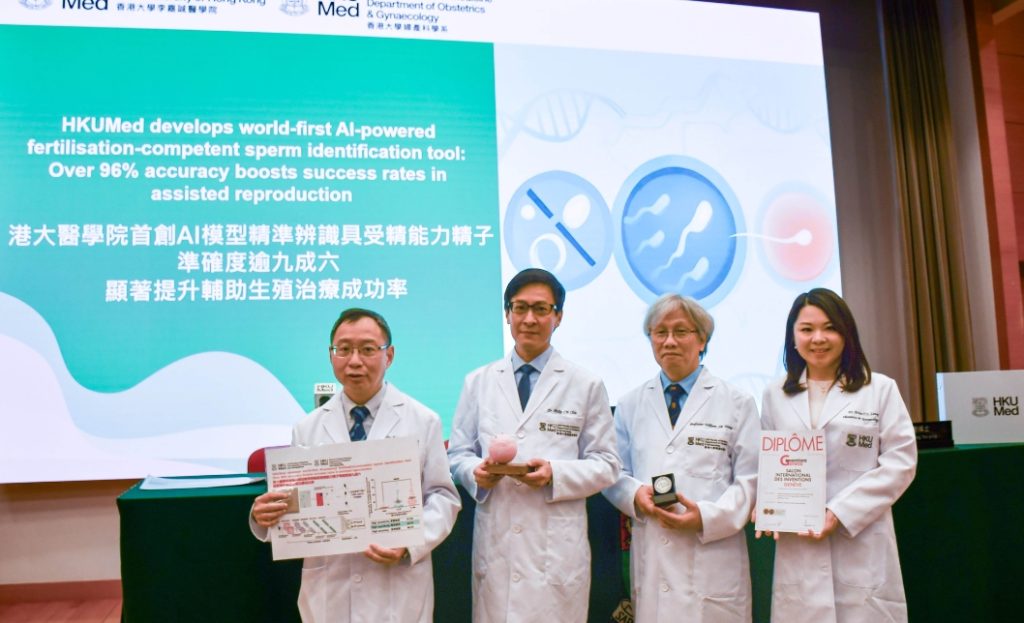
A research team from HKUMed has pioneered a model using artificial intelligence (AI) to identify sperm with fertilisation potential, achieving a clinical validation accuracy rate exceeding 96%. This AI model automatically selects high-quality sperm based on the morphological features of sperm binding to the egg's zona pellucida (ZP), outperforming traditional methods in terms of speed and reliability, reducing human error, and significantly enhancing the precision of male fertility assessment — ultimately increasing the success rates of assisted reproductive procedures.
Environment and Sustainability
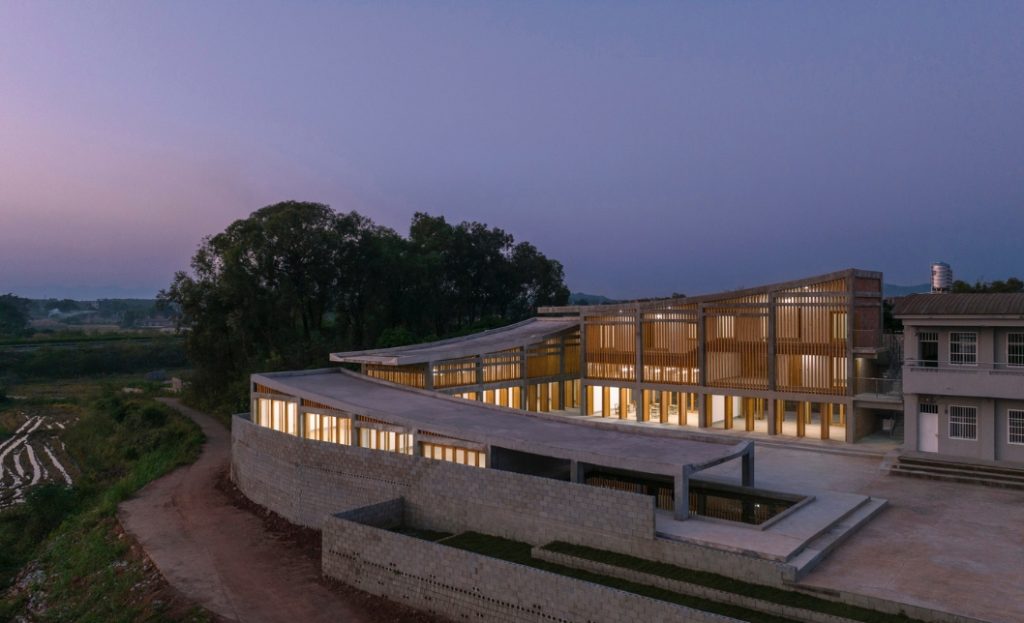
A Hakka village in Guangxi gets abundant rainfall but also struggles with a critical shortage of fresh water and hygiene problems. HKU’s Project Mingde addressed these challenges with the award-winning Duling Educational and Cultural Centre, which harnesses rainfall through innovative water harvesting systems, including tiered roofs, a lotus pond, and underground recycling. The initiative exemplifies interdisciplinary collaboration, cultural sensitivity, and a commitment to social impact, earning international recognition such as the Architizer A+ Jury Award and the Architecture MasterPrize. Overall, it showcases how thoughtful architecture and engineering can turn environmental challenges into sustainable opportunities, fostering resilience and cultural preservation.


