Teaching and Learning
People are bombarded everyday with information about and created by AI technology. Some of it may be true, some misleading, some deliberately wrong. But it can be difficult to separate facts from the noise. With that in mind, the University has launched a mandatory course on AI literacy to ensure students are equipped with some fundamental knowledge about the technology, both its capabilities and limitations.
“AI education or literacy is becoming as important to communication skills as learning Chinese and English. In future, it will be unavoidable that students will need to know how to communicate and understand intelligent machines,” said Professor Ma Yi, Director of the School of Computing and Data Science, which designed the mandatory course launched in September 2025. The course includes components such as the history and fundamental concepts and principles behind AI, ethical uses such as intellectual property protection with AI and the use of AI for homework and research, and the capabilities and limits of things like AI-based robotic technologies.
“We want students to understand what AI can do from an objective and scientific perspective, rather than reading social media or technical reports from companies, which can be severely biased to their advantage, because our students will be leaders in society in the future,” Professor Ma said.
In addition to the AI literacy course, the School is also helping design a new Area of Inquiry in the Common Core, which offers 20–30 courses related to AI from which all undergraduate students need to take at least one course. These courses are multidisciplinary, involving other Faculties such as Law, Arts and Social Sciences, and they delve deeper into specific issues faced in these fields.
Breaking down silos
While HKU-wide programmes are a big part of the School’s remit, they are not the only priority. The School also brings computer science and statistics programmes under one roof in light of technological advances. Previously, computer science was in the Faculty of Engineering and statistics in the Faculty of Science.
“The power of computing and the power of data really have transformed both disciplines,” Professor Ma said. “These two fields were siloed before, but intellectually, they belong together. We want the boundaries to start to disappear because there will be a need in future for truly cross-disciplinary talent,” he said.
The integration runs much deeper than simply housing the two programmes together under one umbrella. The existing curricula in both fields have been substantially reformed. For instance, some statistics courses have been merged and others upgraded to professional degrees, with higher requirements. Computer science programmes have also been streamlined and upgraded with a higher component of AI.
International trend
These changes follow the international trend at institutions such as the Massachusetts Institute of Technology and University of California, Berkeley, which are similarly revamping computer and data science offerings and with whom the School has been collaborating. “Everybody realises that it is necessary to do a substantial redesign and reform in these areas, but we need to do more than just re-organise courses,” Professor Ma said.
New cross-faculty programmes are also being introduced through double degrees with the Faculties of Social Sciences, Arts and Law. There is also an “AI+X” stream in which top students can earn a Master’s degree alongside their disciplinary major, within five years or less.
Postgraduate studies are also being reformed to meet the high demand from the industry for new talent. The School is strengthening its research postgraduate programme with more course requirements and exams, in step with the rest of the University. The aim is to produce graduates who are globally competitive.

The School also has a team of academics who are strong in research, many of them from the HKU Musketeers Foundation Institute of Data Science, which Professor Ma also leads. They have started to collaborate with cities in Chinese Mainland, for instance, a new AI research lab was established in 2024 in Shanghai with local government support.
Overall, though, the School’s main focus is on academic programmes. “What we are doing here is important for the future to make sure our graduates are prepared for the new era of AI technology and the digital revolution. This is also important in helping Hong Kong maintain its position as a place for excellence in higher education,” he said.
This article was originally published in the HKU Bulletin, May 2025 issue
Other Research & Achievements Stories
Achievements and Milestones
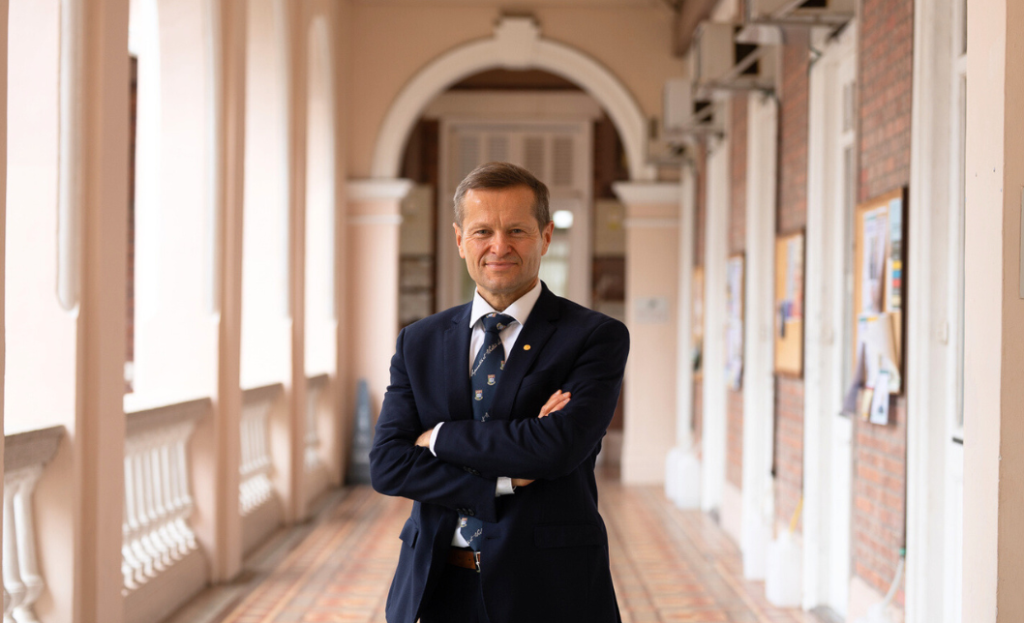
Professor Ferenc Krausz, Nobel Laureate in Physics, joined HKU in November 2025 as Professor, Chair of Laser Physics in the Department of Physics under the Faculty of Science. As a world-renowned authority in ultrafast laser science and quantum optics, Professor Krausz’s appointment will strengthen HKU’s capabilities in cutting-edge research and advance innovations in medical diagnostics worldwide. His joining aligns with HKU’s vision of pursuing academic excellence and advancing knowledge, and it is anticipated that he will make significant contributions to scientific development, benefitting both Hong Kong and the global community. In an exclusive interview, Professor Krausz shared his inspiring journey and insights into the future of scientific discovery.
Natural Science
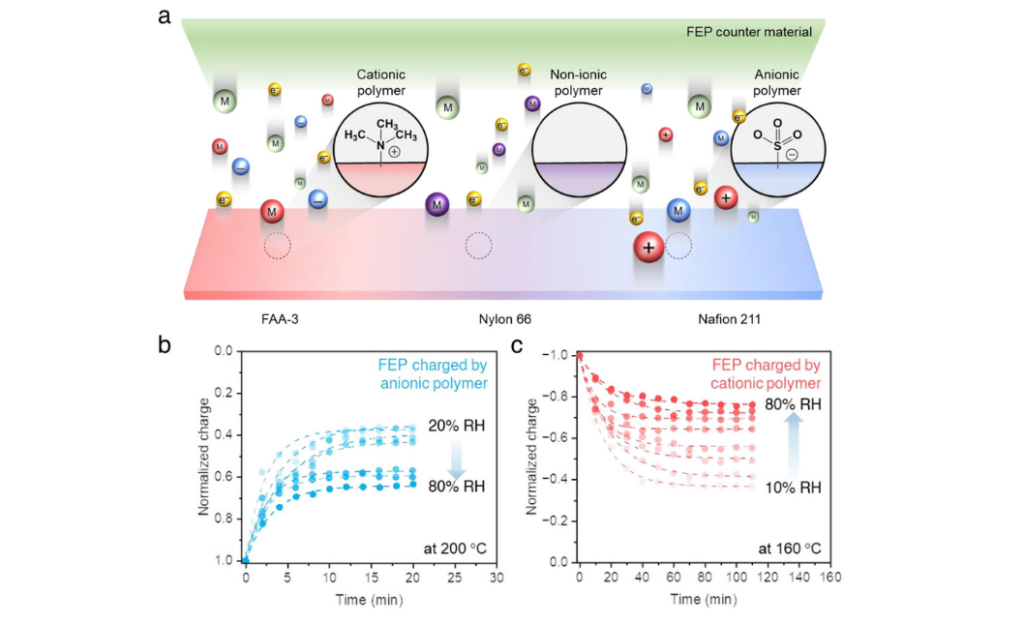
An engineering team at HKU has pioneered the discovery of a new mechanism of ion-driven charge transfer, which provides a deeper understanding of contact electrification phenomena and reveals that electrons and ions transfer simultaneously under changing humidity conditions. This insight will aid in developing new strategies to create materials that work reliably even in humid environments. The findings not only advance fundamental scientific understanding but also open up new possibilities for eco-friendly technologies such as printing, coating, environmental monitoring, and energy harvesting.
Health and Medical Sciences
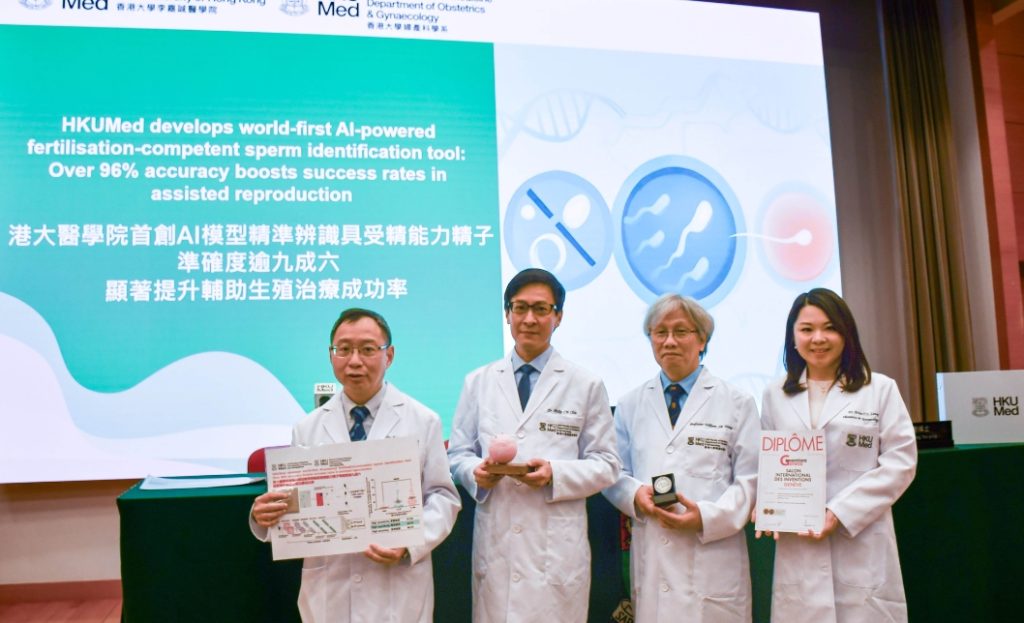
A research team from HKUMed has pioneered a model using artificial intelligence (AI) to identify sperm with fertilisation potential, achieving a clinical validation accuracy rate exceeding 96%. This AI model automatically selects high-quality sperm based on the morphological features of sperm binding to the egg's zona pellucida (ZP), outperforming traditional methods in terms of speed and reliability, reducing human error, and significantly enhancing the precision of male fertility assessment — ultimately increasing the success rates of assisted reproductive procedures.
Environment and Sustainability
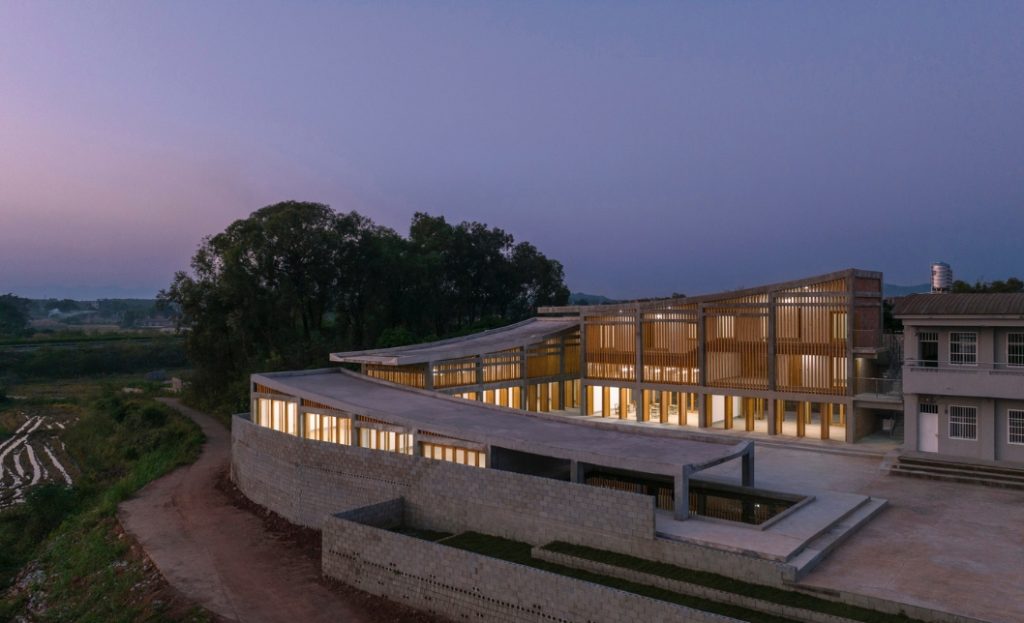
A Hakka village in Guangxi gets abundant rainfall but also struggles with a critical shortage of fresh water and hygiene problems. HKU’s Project Mingde addressed these challenges with the award-winning Duling Educational and Cultural Centre, which harnesses rainfall through innovative water harvesting systems, including tiered roofs, a lotus pond, and underground recycling. The initiative exemplifies interdisciplinary collaboration, cultural sensitivity, and a commitment to social impact, earning international recognition such as the Architizer A+ Jury Award and the Architecture MasterPrize. Overall, it showcases how thoughtful architecture and engineering can turn environmental challenges into sustainable opportunities, fostering resilience and cultural preservation.


