Health and Medical Sciences
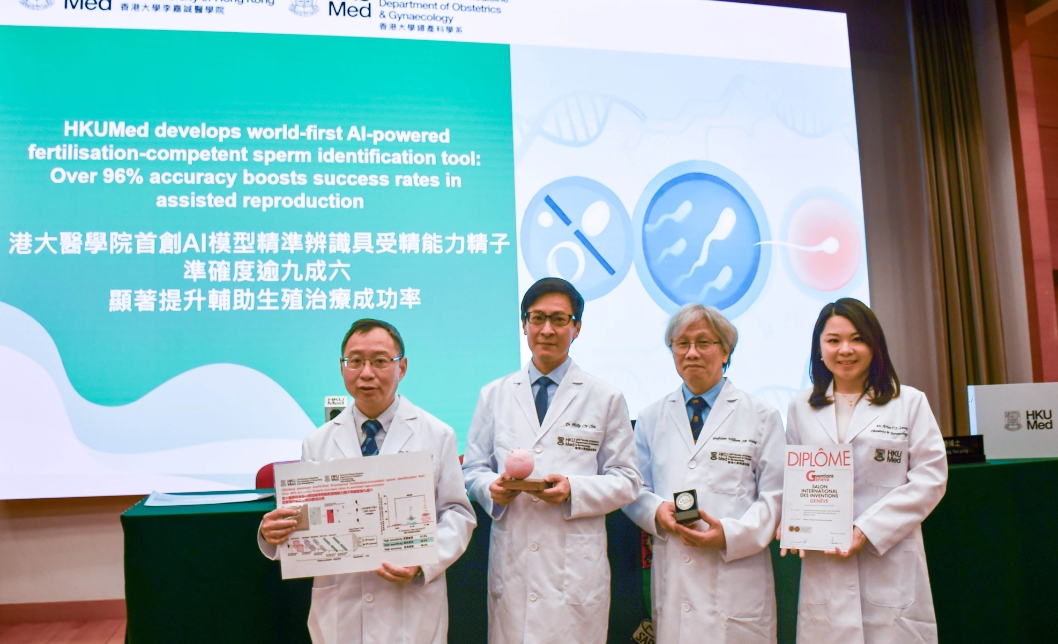
A research team from the Department of Obstetrics and Gynaecology at the University of Hong Kong’s LKS Faculty of Medicine (HKUMed) has developed the world’s first artificial intelligence (AI) model that can accurately identify human sperm with fertilisation potential. This breakthrough could reshape diagnosis and assisted reproductive treatments worldwide.
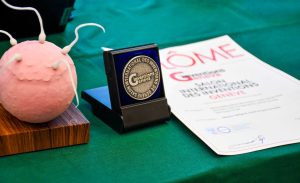
The AI model evaluates sperm morphology based on its ability to bind with the zona pellucida (ZP), which is the outer coat of the egg. By automating a process that has traditionally depended on manual and subjective analysis, the model has demonstrated a clinical validation accuracy rate exceeding 96%. This innovative approach outperforms traditional methods in terms of speed and reliability, reduces human error, and significantly enhances the precision of male fertility assessment—ultimately increasing the success rates of assisted reproductive procedures. The research findings were published in the international journal Human Reproduction Open^ and won the Silver Award at the 50th Geneva International Invention Fair in 2025.
Infertility is a significant global health concern, affecting about one in six couples of reproductive age worldwide, with male factors accounting for 20–70% of cases. According to the World Health Organisation (WHO), infertility is projected to become the third most common disease globally, following cancer and cardiovascular diseases. While assisted reproduction treatments (ARTs) remain the most effective treatments for infertility, their success rates are limited by the accuracy of existing diagnostic tools.
Limitations of traditional semen analysis
Semen analysis is a standard clinical assessment for male fertility potential before ART. Traditionally performed manually under a microscope, this analysis assesses sperm morphology in accordance with WHO guidelines. However, Professor William Yeung Shu-biu, from the Department of Obstetrics & Gynaecology, School of Clinical Medicine, HKUMed, explained: ‘This method is not only labour-intensive and time-consuming, but also highly dependent on the subjective judgment of laboratory technicians. This leads to significant variations between individuals and across laboratories, making it difficult to standardise sperm quality criteria and undermining the accuracy of male fertility evaluations.’
A typical male ejaculate contains 100 to 200 million motile sperm per millilitre, but only about 7% of these sperm have fertilisation potential. During natural conception, the selection mechanisms within the female reproductive tract eliminate inferior sperm, ensuring that only fertilisation-competent sperm can initiate fertilisation. However, ART laboratories currently lack an equally efficient sperm selection method and instead rely primarily on parameters from semen analysis — such as sperm concentration, motility and morphology — to guide fertilisation methods in ART, like in vitro fertilisation (IVF) and intracytoplasmic sperm injection (ICSI).
Professor Yeung explained: ‘These traditional semen parameters have limitations in predicting the true fertilisation potential of male sperm. Even with normal semen analysis results, 5% to 25% of men still experience low fertilisation rates (less than 30%) or complete fertilisation failure during IVF. The failure in ART not only prolongs the time it takes for couples to conceive but also increases psychological stress and the financial burden.’
World-first AI model to redefine high-quality sperm from the egg’s perspective
The binding of sperm to the ZP is the crucial first step in fertilisation. This layer selectively binds to sperm with normal morphology, intact chromosomes and fertilisation capability — a natural screening mechanism ensuring that only high-quality sperm fertilise the egg. Professor Philip Chiu Chi-ngong, Associate Professor in the same department and co-leader of the study, noted, ‘Based on this physiological process, our team developed a highly automated AI model that analyses morphological features to accurately determine the percentage of human sperm capable of binding to the ZP, providing a highly reliable assessment of male fertility.’
The AI model developed by the HKU team is based on this selective binding mechanism and evaluates sperm quality from the egg’s perspective, with a clinical threshold established at 4.9%. Men with less than 4.9% of sperm showing binding capability are considered at higher risk of fertilisation problems. ‘The AI model offers early warning of fertilisation issues and helps identify patients with impaired fertilisation in IVF,’ Professor Chiu added. ‘It serves as a novel diagnostic tool for detecting fertility issues that conventional semen analysis may overlook, allowing clinicians to tailor more effective treatment plans and improve pregnancy outcomes.’
Deep-learning technology delivers promising results
Using advanced deep-learning techniques, HKUMed researchers trained the AI model on more than 1,000 sperm images, achieving an accuracy rate over 96%. From 2022 to 2024, the team further validated the model by examining over 40,000 sperm images involving 117 men diagnosed with infertility or unexplained infertility. The results confirmed a strong correlation between the proportion of sperm capable of binding to the ZP and the success rate of ART procedures.
Professor Chiu highlighted the clinical value of AI in evaluating male fertility: ‘Conventional assessment methods rely heavily on subjective visual judgment, which has inherent limitations. In contrast, our AI model precisely analyses subtle traits in sperm, enabling a more accurate prediction of fertilisation potential.’
For couples struggling with infertility, repeated attempts at ART are often required, inevitably leading to significant stress, disappointment and financial strain. HKUMed team is committed to seeking medical breakthroughs. This innovative technology reflects scientific progress and provides support for couples in need, helping them realise their reproductive dreams more quickly.
Professor Yeung added, ‘The advent of AI allows us to assess sperm fertilisation capacity in a standardised, reproducible manner, improving clinical decision-making and enabling personalised treatment plans. This innovation has the potential to improve overall infertility management, reduce fertilisation failure rates, and shorten the time to pregnancy. We are currently conducting large-scale clinical trials to further validate the application of the AI model and hope to benefit more patients.’
About the research team
The study was led by Professor Philip Chiu Chi-ngong, Associate Professor, and Professor William Yeung Shu-biu, Department of Obstetrics and Gynaecology, School of Clinical Medicine, HKUMed; and Professor Yu Lequan, Assistant Professor, Statistics and Actuarial Science, School of Computational and Data Sciences, HKU. The primary research was conducted by Dr Erica Leung Tsz-ying, Postdoctoral Fellow from the same Department of Obstetrics and Gynaecology, with support from the research and clinical teams.
Acknowledgments
This research was funded by the Health and Medical Research Fund of the Health Bureau of the Government of the Hong Kong Special Administrative Region of the People’s Republic of China, and the Advanced Biomedical Instrumentation Centre. The University of Hong Kong-Shenzhen Hospital served as the clinical research partner.
^Link to the Human Reproduction Open research:
https://academic.oup.com/hropen/article/2025/3/hoaf024/8128342
Other Research & Achievements Stories
Achievements and Milestones
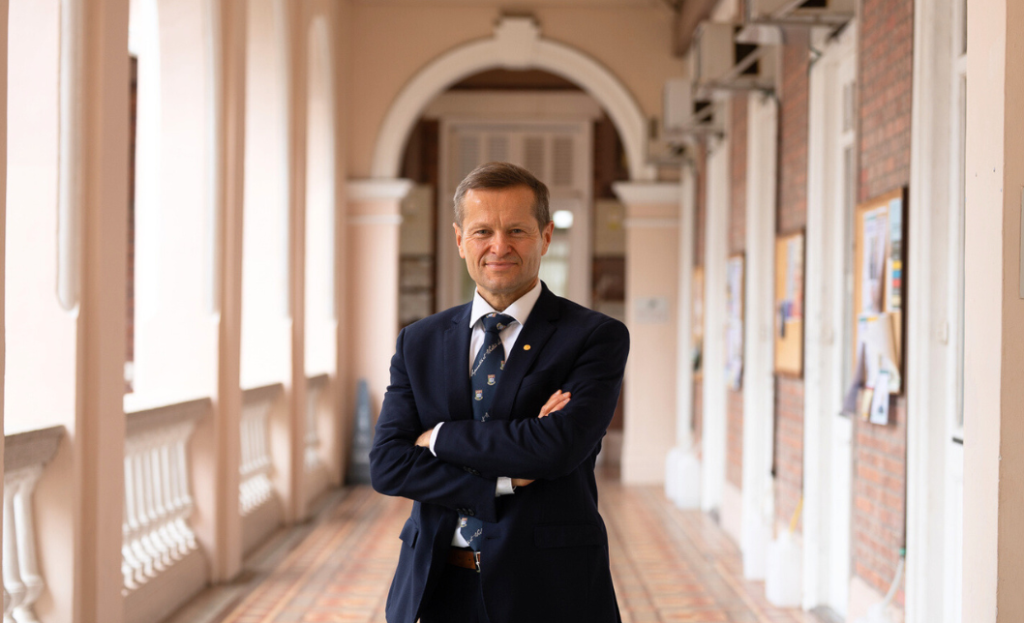
Professor Ferenc Krausz, Nobel Laureate in Physics, joined HKU in November 2025 as Professor, Chair of Laser Physics in the Department of Physics under the Faculty of Science. As a world-renowned authority in ultrafast laser science and quantum optics, Professor Krausz’s appointment will strengthen HKU’s capabilities in cutting-edge research and advance innovations in medical diagnostics worldwide. His joining aligns with HKU’s vision of pursuing academic excellence and advancing knowledge, and it is anticipated that he will make significant contributions to scientific development, benefitting both Hong Kong and the global community. In an exclusive interview, Professor Krausz shared his inspiring journey and insights into the future of scientific discovery.
Natural Science
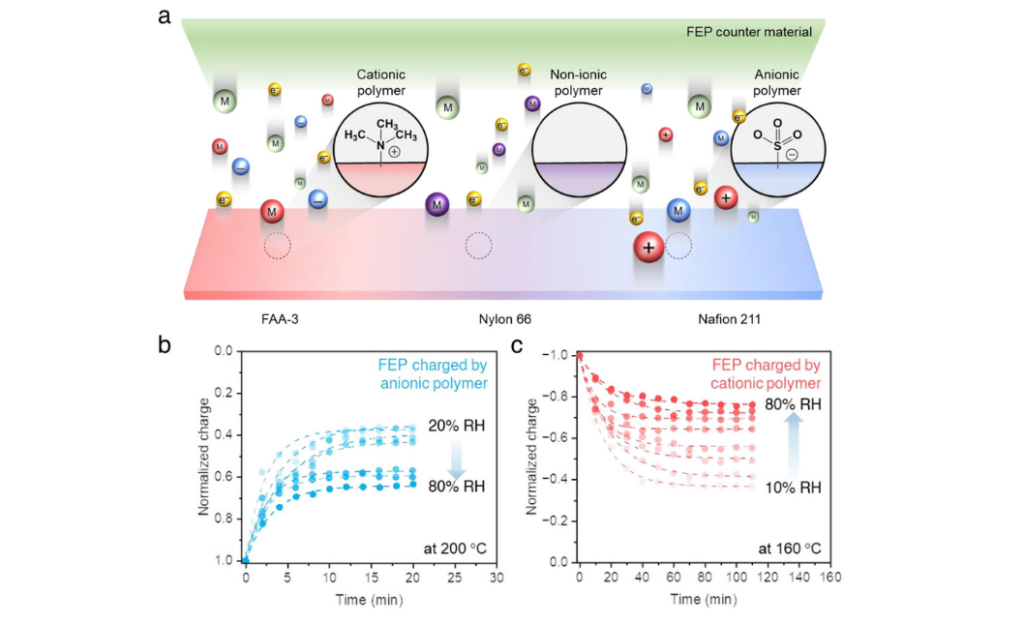
An engineering team at HKU has pioneered the discovery of a new mechanism of ion-driven charge transfer, which provides a deeper understanding of contact electrification phenomena and reveals that electrons and ions transfer simultaneously under changing humidity conditions. This insight will aid in developing new strategies to create materials that work reliably even in humid environments. The findings not only advance fundamental scientific understanding but also open up new possibilities for eco-friendly technologies such as printing, coating, environmental monitoring, and energy harvesting.

Environment and Sustainability
A Hakka village in Guangxi gets abundant rainfall but also struggles with a critical shortage of fresh water and hygiene problems. HKU’s Project Mingde addressed these challenges with the award-winning Duling Educational and Cultural Centre, which harnesses rainfall through innovative water harvesting systems, including tiered roofs, a lotus pond, and underground recycling. The initiative exemplifies interdisciplinary collaboration, cultural sensitivity, and a commitment to social impact, earning international recognition such as the Architizer A+ Jury Award and the Architecture MasterPrize. Overall, it showcases how thoughtful architecture and engineering can turn environmental challenges into sustainable opportunities, fostering resilience and cultural preservation.
Natural Science
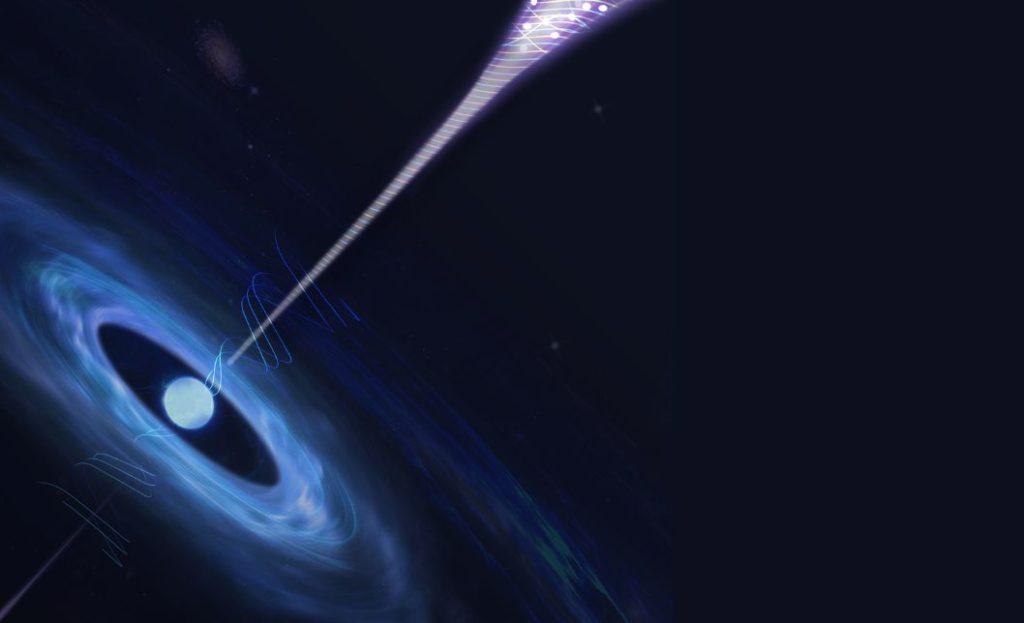
Researchers from the University of Hong Kong, Nanjing University, and the Chinese Academy of Sciences detected the first millisecond pulsation — a "heartbeat" — inside a gamma-ray burst (GRB 230307A), indicating the birth of a magnetar. Using data from GECAM and Fermi satellites, they identified a 909-Hz oscillation lasting 160 milliseconds, providing direct evidence that some GRBs are powered by newly formed, rapidly spinning neutron stars with strong magnetic fields, rather than black holes. This discovery confirms theoretical predictions and offers new insights into the engines driving cosmic explosions.


