Natural Science
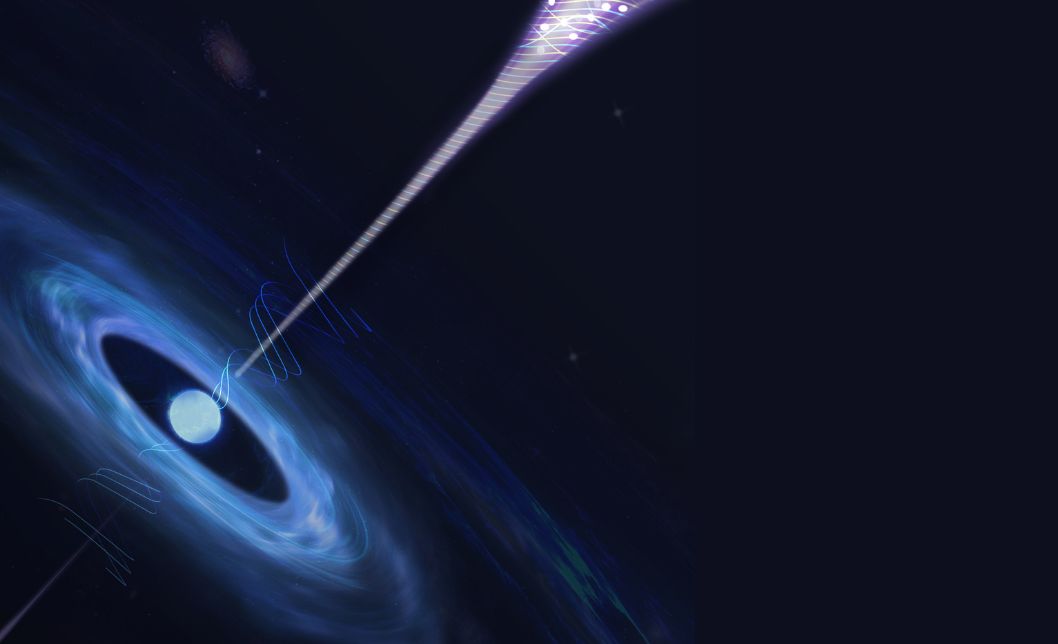
A discovery involving researchers at The University of Hong Kong (HKU) has, for the first time, unveiled millisecond pulsations hidden within a powerful cosmic explosion known as a gamma-ray burst (GRB).
A collaboration among HKU, Nanjing University, and the Institute of High Energy Physics of the Chinese Academy of Sciences (CAS) detected a brief but highly coherent oscillation in the GRB designated GRB 230307A on 7 March 2023. The signal, spinning nearly a thousand times per second, points to the birth of a “millisecond magnetar” — a rapidly rotating neutron star with an ultra-strong magnetic field. The findings have recently been published in Nature Astronomy^, marking a milestone in astrophysics and providing the clearest evidence yet that magnetars can power some of the most luminous explosions in the universe.
Deciphering the “Heartbeat”
Gamma-ray bursts are the brightest explosions known, briefly outshining the entire gamma-ray sky. They are triggered when compact stars — such as neutron stars — collide and merge, or when massive stars collapse, leaving behind exotic remnants. For decades, scientists have debated whether these remnants collapse immediately into black holes or survive as highly magnetised neutron stars.
GRB 230307A detected by China’s GECAM satellites (B and C) and NASA’s Fermi satellite (GBM), was the second brightest GRB ever recorded. Optical follow-up observations confirmed that it originated from a compact star merger. Yet its unusually long, one-minute duration defied standard expectations, which predict less than two seconds of emission from such events.
“This event gave us a rare opportunity,” said Professor Bing Zhang, Chair Professor of the Department of Physics at HKU and co-corresponding author of the study. “By uncovering its hidden ‘heartbeat’, we can finally say with confidence that some GRBs are powered not by black holes, but by newborn magnetars.”
The research team sifted through more than 600,000 datasets collected by the GECAM satellites — dedicated gamma-ray detectors designed and launched by the Institute of High Energy Physics (CAS) in Beijing. The analysis, led by Nanjing University, revealed a striking 909-Hz quasi-periodic oscillation (QPO) lasting just 160 milliseconds.
“This is the first time humanity has directly observed a periodic signal from a millisecond magnetar inside a gamma-ray burst,” said PhD student Run-Chao CHEN of Nanjing University, the paper’s first author. “It is like hearing the first heartbeat of a newborn star.”
The detection was independently confirmed using data from GECAM-B, GECAM-C, and NASA’s Fermi Gamma-ray Burst Monitor, cementing its astrophysical origin.
Why So Brief?
The fleeting pulse raised new questions. HKU Professor Zhang offered a theoretical explanation, “The magnetar’s rapid spin imprints a periodic signal onto the gamma-ray jet through its magnetic field. However, because the jet evolves quickly, this signal appears only when the emission briefly becomes asymmetric. For just 160 milliseconds, the heartbeat was visible before the jet’s symmetry hid it again.”
This interpretation suggests that GRB 230307A was powered by a Poynting-flux dominated jet — a stream of energy driven primarily by magnetic fields rather than matter. Both the millisecond magnetar and magnetised jet concepts were proposed by Professor Zhang more than a decade ago. This “heartbeat” detection provides the strongest evidence yet linking theory to observation.
Research Impact
Until now, GRB central engines could only be inferred indirectly from afterglow modelling or theoretical assumptions. This study provides the first direct observational imprint of a magnetar’s spin in a gamma-ray burst.
“This discovery transforms our understanding of the most extreme explosions in the cosmos,” Professor Zhang emphasised. “It shows that newly born magnetars can survive compact star mergers and act as powerful cosmic engines. This opens a new frontier in multimessenger astronomy, linking gamma rays, gravitational waves, and the physics of compact stars.”
The team plans to search for similar pulsations in other bright GRBs. Each detection will bring astronomers closer to understanding the life and death of compact stars, the role of magnetars in cosmic evolution, and the origins of extreme astrophysical phenomena.
“As more advanced space observatories come online, we expect to uncover more of these fleeting signals,” Professor Zhang said. “Each one will be a heartbeat from the depths of space, telling us the story of the mysterious universe under the most extreme conditions imaginable.”
The research was carried out jointly by HKU, Nanjing University, and the Institute of High Energy Physics, CAS. Professors Bin-Bin Zhang (Nanjing University) and Shao-Lin Xiong (CAS) are co-corresponding authors alongside HKU’s Professor Bing Zhang. The project received support from the China Ministry of Science and Technology’s Key R&D Program, the National Natural Science Foundation of China, the China Space Station Program, and Jiangsu Province Innovation Programs. The GECAM satellite mission was developed under the Strategic Pioneer Program on Space Science (Phase II) of CAS.
^Link to the Nature Astronomy: http://doi.org/10.1038/s41550-025-02649-w
Other Research & Achievements Stories
Achievements and Milestones
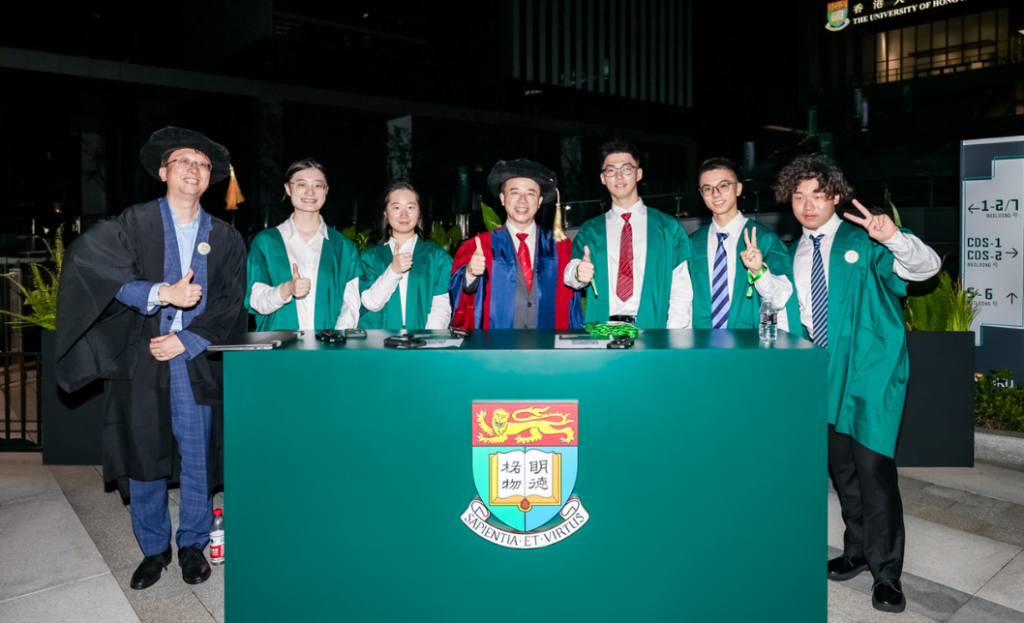
The University of Hong Kong celebrated the opening of Phase II of the HKU Zhangjiang Base in Shanghai, marking a major milestone in its Shanghai strategy. The new facilities strengthen HKU’s research, education and innovative presence in the Yangtze River Delta, offering state-of-the-art laboratories, teaching spaces and student facilities. Addressing the event, HKU President and Vice-Chancellor Professor Xiang Zhang highlighted the University’s commitment to integrating research, education and industry collaboration to nurture future-ready talent. Shortly after opening, the HKU Zhangjiang Base welcomed more than 500 students from around the world for the new academic year, offering hands-on research opportunities closely aligned with industry needs and supporting the development of a full-chain innovation ecosystem that combines research, education, and industrialisation.

Achievements and Milestones
The HKU Talent Forum and the Second Anniversary Celebration of the HKU Techno-Entrepreneurship Academy (TEA) in Qianhai brought together leaders from government, academia, industry and innovation sectors to discuss talent development and entrepreneurship in the AI era. HKU President and Vice-Chancellor Professor Xiang Zhang emphasised that universities should develop character, capability and wisdom, noting that asking the right questions is more important than simply accessing knowledge. Speakers highlighted the need to use AI as a tool while preserving human judgement and values. The event also celebrated TEA’s achievements in nurturing cross-border innovation, supporting 100 incubated projects and attracting significant investment, while strengthening Hong Kong-Shenzhen collaboration in research, talent, and entrepreneurship.
Achievements and Milestones
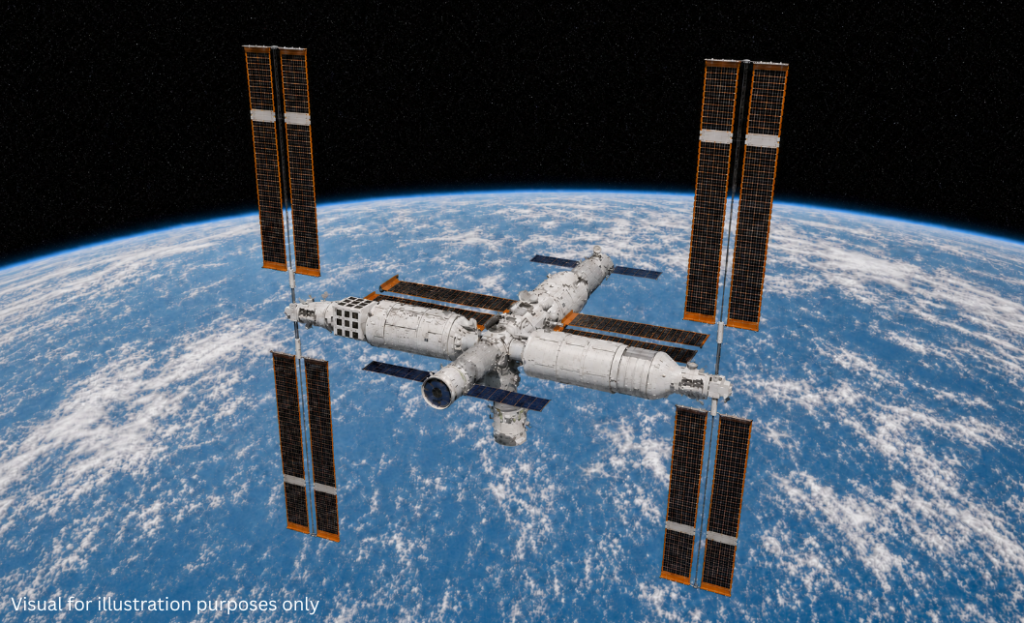
HKU alumna Dr Lai Ka-ying becomes the first from HKU and Hong Kong to join a national manned space mission as a payload specialist. Having spent close to four months in orbit, Dr Lai hosted the ‘Tiangong Class’ via a live broadcast from China's Tiangong Space Station. Through real-time interaction between space and Earth, she shared knowledge of space science and her experiences as an astronaut with teachers and students in Hong Kong and Macau, inspiring the next generation to explore the unknown. Holding Bachelor of Science in Computer Science and Information Systems, MPhil, and PhD (Computer Science) degrees from HKU, Dr Lai’s expertise in data processing, algorithms, and cybersecurity highlights the increasingly important role of advanced computing in modern space missions. Her journey from campus laboratories to the Tiangong space station demonstrates how HKU equips world-class talent with both technical excellence and resilience. HKU continues to advance frontier aerospace…
Natural Science
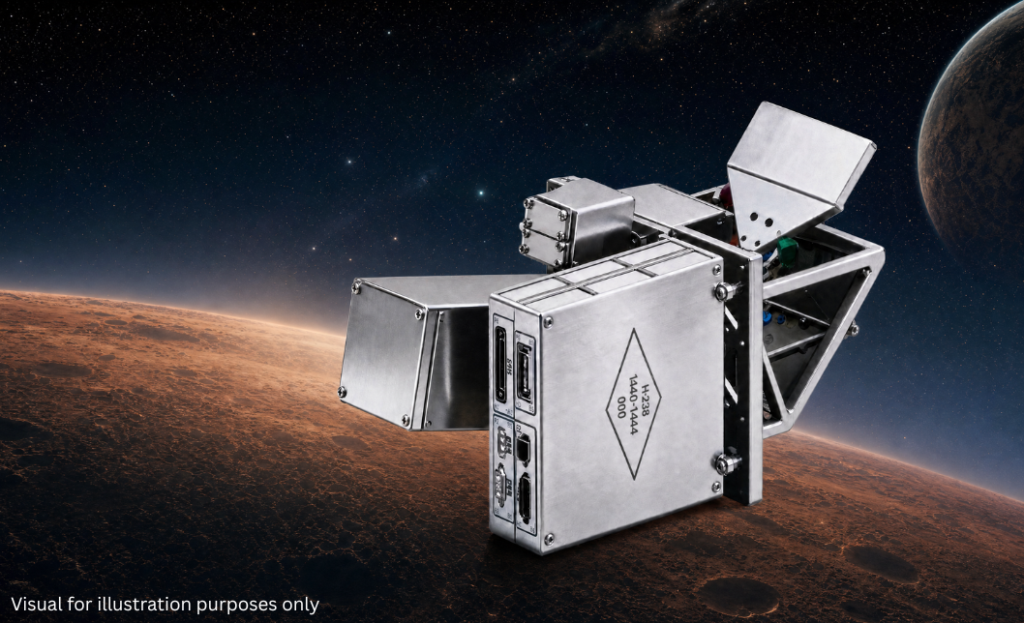
A ‘Short-Wavelength Infrared Spectrometer’ developed by a research team in the HKU Department of Earth and Planetary Sciences has been selected as a payload for China’s Tianwen-3 Mars Sample Return mission. The instrument will undertake critical scientific tasks – including the search for biosignatures, the detection of hydrous minerals, and support for landing site selection – thus – providing essential data that will contribute to addressing fundamental questions, including the uniqueness of life on Earth and the universality of biochemical mechanisms. Led by HKU in collaboration with leading Chinese Mainland research institutions, the spectrometer project highlights Hong Kong’s integration into the nation’s strategic advancement. Its selection not only demonstrates HKU’s continued breakthroughs in frontier research but also its contributions to advancing planetary science development and nurturing local innovation and technology talent.


