
Achievements and Milestones
How do we define wisdom in an era of AI? Is it distinct from knowledge? These are challenging questions for universities now and go to the heart of their purpose.
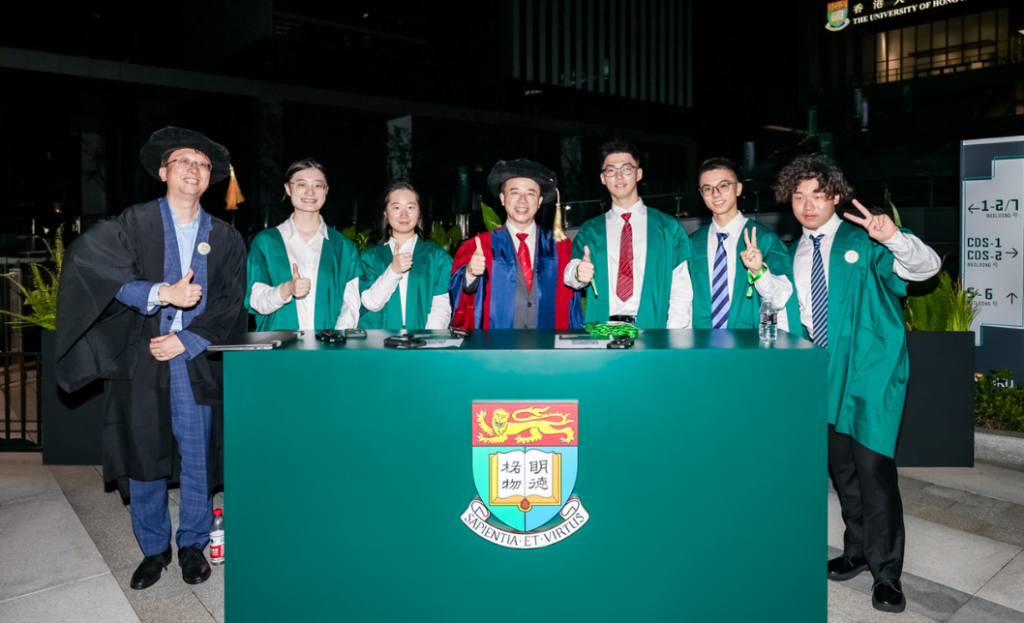
They were also the focus of the HKU Talent Forum and the Second Anniversary Celebration of the HKU Techno-Entrepreneurship Academy (TEA) in Qianhai, Shenzhen, held on September 5, bringing together government, academia, industry, investors, entrepreneurs and young innovators to discuss talent development in the age of artificial intelligence and ways to translate research into innovation through deeper Hong Kong-Shenzhen collaboration.
HKU President and Vice-Chancellor Professor Xiang Zhang set the tone for the Forum by inviting its participants to consider that future universities should not be merely repositories of knowledge. “They must be crucibles for capability-building and character formation. In an age when AI can provide answers, knowing how to ask the right questions is a higher-order form of wisdom,” he said.
Professor Zhang said HKU would continue to connect research-led education with interdisciplinary learning, project-based work, entrepreneurship and industry engagement, and welcomed long-term collaboration with employers on student development and innovation.
Joining Professor Zhang and other key HKU leaders and academics at the Forum were Mr Shourui Wang, Member of the Standing Committee of the Communist Party of China (CPC) Shenzhen Municipal Committee and Secretary of the Qianhai Cooperation Zone Work Committee of the CPC Shenzhen Municipal Committee, along with representatives from relevant Shenzhen and Qianhai authorities, and executives and innovation leaders from major enterprises and start-ups.
Mr Wang pointed out that aligning education, technology, and talent was what was driving Qianhai’s efforts to execute its landmark reform plan and help turn the Greater Bay Area into an international technology innovation centre. Staying focussed on its mission to steer by ‘relying on Hong Kong, serving the Chinese Mainland, and opening up to the world’, Qianhai was advancing an upgraded ‘1510’ development model. Building on the progress of the Qianhai Shenzhen-Hong Kong Youth Innovation and Entrepreneur Hub, this model was bringing together policies, industry-academia research, financing, talent, and key platforms into a unified support ecosystem.
The event was also an opportunity to recognise the achievements of the HKU TEA which has welcomed 100 incubated projects in Qianhai. Established in Qianhai in 2024, the Academy supports the translation of HKU research into entrepreneurship and industry engagement, while developing a cross-border innovation and talent ecosystem. During its first two years, the HKU TEA introduced 24 professors, 52 doctoral researchers, 171 young people from Hong Kong and 400 young entrepreneurs. Its projects have disclosed aggregate financing of RMB 850 million and an overall valuation approaching RMB 7 billion. To mark its second anniversary, the Bay·HUNDRED initiative was launched to further connect research, talent, entrepreneurship and industry.
Professor Ngô Bảo Châu, Fields Medallist and Chair Professor of Mathematics, explored this question of how best to nurture talent in another way. In his masterclass ‘Can Mathematical Research Help Us Survive the AI Wave?’, he reiterated the call for exercising judgement when leveraging the advantages of AI. “With AI assistance, mathematicians can understand the world better than when working independently. The economic challenge AI presents is how to redefine human value and recognise the fruits of human labour, rather than simply handing everything to machines,” Professor Ngô said. “The crucial choice is personal. We can surrender our intellect to AI, wait to be fed all responses from AI, or we can ask AI to help us achieve a broader and deeper understanding of the world.” That distinction will shape how people educate students, organise work and decide what remains worth doing for themselves.
He reminded the participants that the deepest risk lies not only in what technology like AI can do, but in the economic logic through which it is deployed. “The question is not whether we should stop technological progress. We cannot and should not. The question is what we will value when technology makes substitution possible,” he said.
“The right response is not to stand apart from AI. Let AI be our tool, our companion in that endeavour, because that’s our chance to survive this revolution,” he noted. “The word ‘companion’ matters. A companion does not absolve us of responsibility or live our intellectual lives for us. It travels with us as we undertake a difficult journey.”
The Forum, part of the HKU Talent Forum Series – HKU’s flagship Chinese Mainland platform for bringing the University’s academic and student talent into dialogue with employers, alumni, government and other strategic partners, also included other exchanges on the qualities needed for world-class talent in the AI era and on how technology ventures can progress from early-stage validation to scalable growth. Professor Chen Lin, HKU Vice-President and Pro-Vice-Chancellor (Business), observed that HKU TEA’s progress demonstrated the value of combining forward-looking policy support with an open industrial ecosystem.
This article was originally published in Keynotes@HKU, September 2026 issue
Other Research & Achievements Stories
Achievements and Milestones
The University of Hong Kong celebrated the opening of Phase II of the HKU Zhangjiang Base in Shanghai, marking a major milestone in its Shanghai strategy. The new facilities strengthen HKU’s research, education and innovative presence in the Yangtze River Delta, offering state-of-the-art laboratories, teaching spaces and student facilities. Addressing the event, HKU President and Vice-Chancellor Professor Xiang Zhang highlighted the University’s commitment to integrating research, education and industry collaboration to nurture future-ready talent. Shortly after opening, the HKU Zhangjiang Base welcomed more than 500 students from around the world for the new academic year, offering hands-on research opportunities closely aligned with industry needs and supporting the development of a full-chain innovation ecosystem that combines research, education, and industrialisation.
Achievements and Milestones
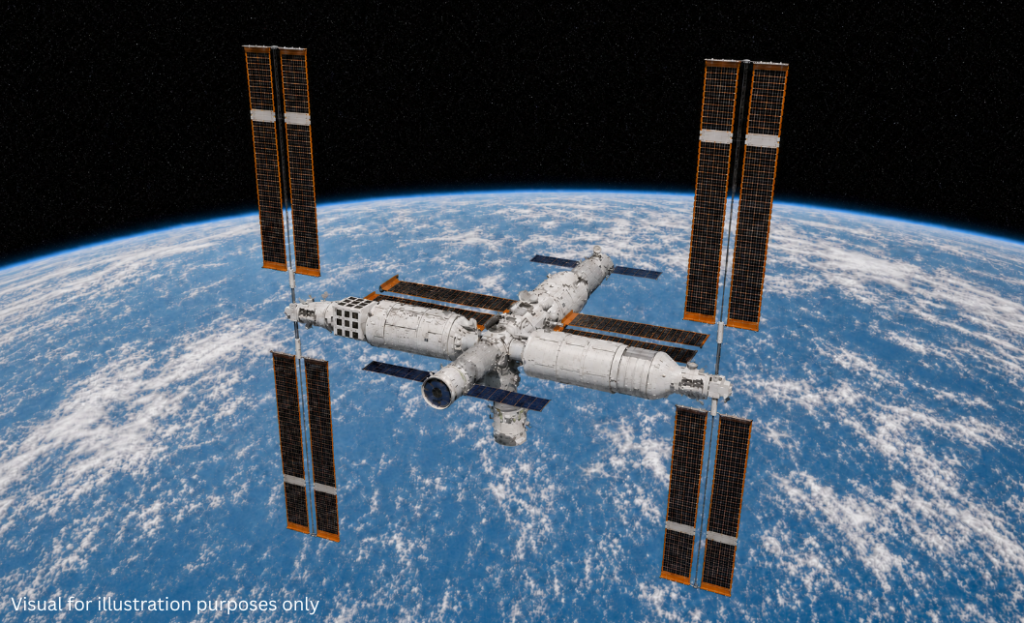
HKU alumna Dr Lai Ka-ying becomes the first from HKU and Hong Kong to join a national manned space mission as a payload specialist. Having spent close to four months in orbit, Dr Lai hosted the ‘Tiangong Class’ via a live broadcast from China's Tiangong Space Station. Through real-time interaction between space and Earth, she shared knowledge of space science and her experiences as an astronaut with teachers and students in Hong Kong and Macau, inspiring the next generation to explore the unknown. Holding Bachelor of Science in Computer Science and Information Systems, MPhil, and PhD (Computer Science) degrees from HKU, Dr Lai’s expertise in data processing, algorithms, and cybersecurity highlights the increasingly important role of advanced computing in modern space missions. Her journey from campus laboratories to the Tiangong space station demonstrates how HKU equips world-class talent with both technical excellence and resilience. HKU continues to advance frontier aerospace…
Natural Science
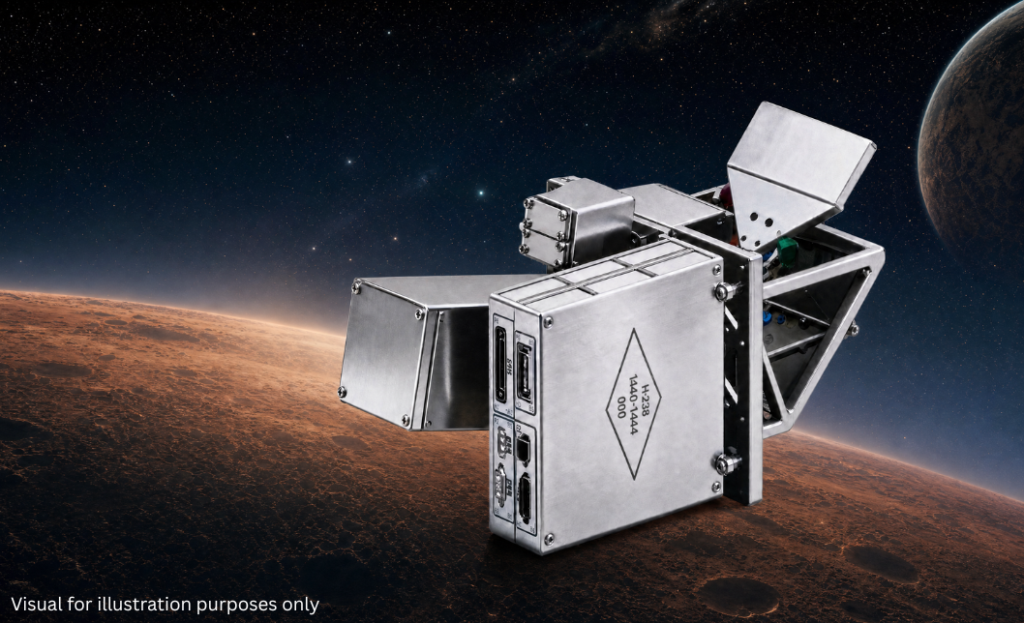
A ‘Short-Wavelength Infrared Spectrometer’ developed by a research team in the HKU Department of Earth and Planetary Sciences has been selected as a payload for China’s Tianwen-3 Mars Sample Return mission. The instrument will undertake critical scientific tasks – including the search for biosignatures, the detection of hydrous minerals, and support for landing site selection – thus – providing essential data that will contribute to addressing fundamental questions, including the uniqueness of life on Earth and the universality of biochemical mechanisms. Led by HKU in collaboration with leading Chinese Mainland research institutions, the spectrometer project highlights Hong Kong’s integration into the nation’s strategic advancement. Its selection not only demonstrates HKU’s continued breakthroughs in frontier research but also its contributions to advancing planetary science development and nurturing local innovation and technology talent.
Innovation and Technology
The Department of Electrical and Computer Engineering in the HKU Faculty of Engineering, together with the Centre for Advanced Semiconductors and Integrated Circuits, has developed the world’s first programmable neuromorphic hardware platform that can operate at temperatures approaching absolute zero, showcasing HKU’s research excellence in cryogenic electronics and quantum technologies. The research team has discovered an innovative way to enable a single transistor to mimic the energy-efficient spiking behaviour of biological neurons at temperatures down to 10 millikelvin. This greatly reduces the power consumption and thermal load of cryogenic control systems for quantum computers, providing a potential solution for large-scale quantum computing and quantum error correction. At the same time, this robust and scalable cryogenic chip technology supports complex local data processing in the extreme environments encountered in deep-space missions, strengthening humanity’s ability to explore the Moon and the outer reaches of our solar system.


