Achievements and Milestones
In a first for the University and Hong Kong, HKU alumna Dr Lai Ka-ying was selected to join the Shenzhou-23 manned spaceflight mission as a payload specialist. Thrilled HKU students and colleagues gathered at the Jockey Club Student Village IV in Wong Chuk Hang to cheer her on during the lift-off from the Jiuquan Satellite Launch Center on 24 May 2026, wishing her a safe and successful journey!
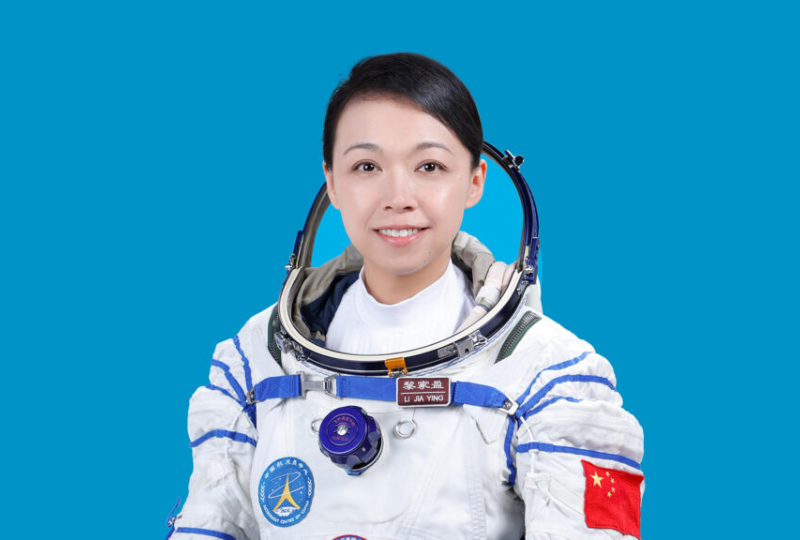
(Image courtesy of the Information Services Department, HKSAR Government)
Born and raised in Hong Kong, Dr Lai – who holds Bachelor of Science in Computer Science and Information Systems, MPhil, and PhD (Computer Science) degrees, all from HKU – is participating in the Shenzhou-23 mission as one of its three-member crew alongside Yangzhu Zhu and Zhiyuan Zhang, who have been tasked to carry out more than 100 scientific and applications projects in life sciences, materials science, fluid physics and medicine.
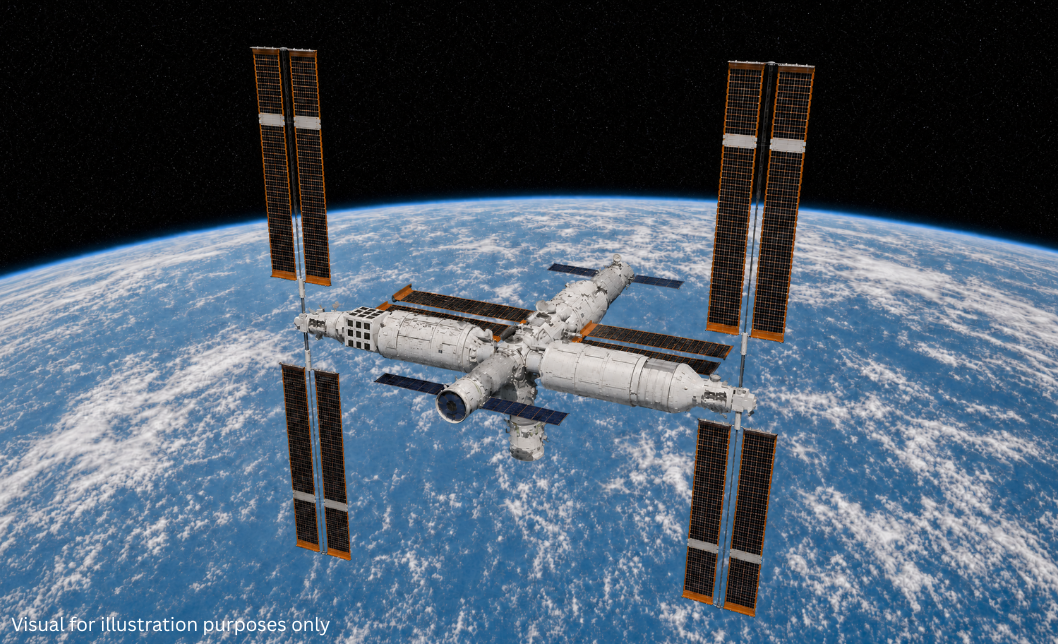
The Shenzhou-23 spacecraft successfully docked at the Tiangong space station on 25 May 2026, thus beginning one of the mission projects of a full-year stay in orbit.
Back on Earth, HKU President and Vice-Chancellor Professor Xiang Zhang congratulated Dr Lai, noting that her achievement was a moment of immense pride for HKU and the city, and a testament to the world-class calibre of the University’s talent.
“Ka-ying’s journey from our labs to the stars embodies the perseverance and excellence of both the HKU and Hong Kong spirit,” he said. “Her success serves as a beacon for our students, proving that with dedication, the most ambitious dreams are within reach. We hope Ka-ying’s mission inspires a new generation of Hong Kong scientists to reach for the stars and contribute to our nation’s glorious space odyssey.”
Today, space missions are no longer just about hardware; they are driven by complex algorithms, cybersecurity, and massive data processing. Dr Lai’s academic background and expertise in computer science were critical for her selection as a mission crew member, as they provide the foundational ‘digital architecture’ necessary for a payload specialist.
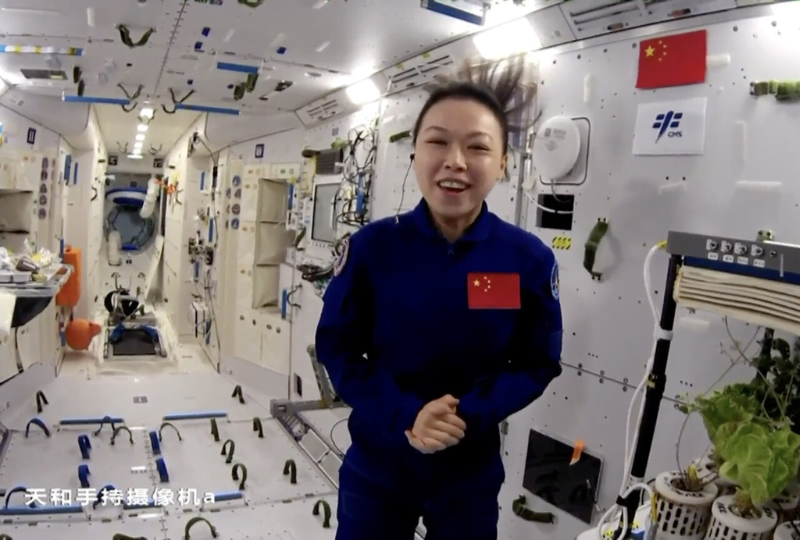
(Image courtesy of ‘Tiangong Class’ Hong Kong and Macao Designated Session)
Having spent close to four months in orbit, she joined her Mission commanders to conduct a 90-minute live broadcast ‘Tiangong Class’ from aboard China’s Tiangong Space Station on September 9. Audiences included students and teachers from universities, primary and secondary schools in Hong Kong and Macao, researchers and technology professionals, as well as representatives from youth organisations. Aerospace experts were also invited to participate in the lectures. Among them was Professor Zhonghua Yao, Director of the Laboratory for Space Research at HKU, who has participated in major national missions, including Tianwen-1, Tianwen-2, Tianwen-4, and Chang’e 8.
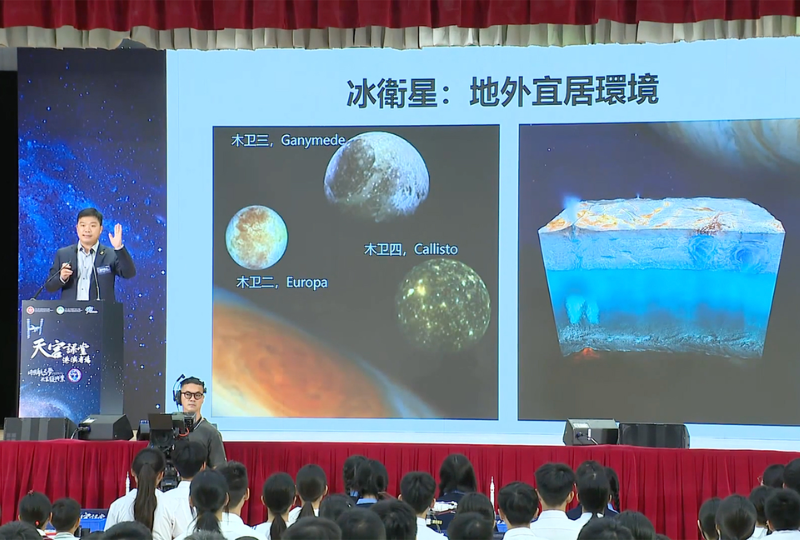
Professor Zhonghua Yao was one of the aerospace experts participating in the lectures.
(Image courtesy of ‘Tiangong Class’ Hong Kong and Macao Designated Session)
The astronauts took the viewers through some science experiments and answered questions about space missions and daily life. Students also jumped at the opportunity to ask the astronauts questions. A fourth-year HKU student was curious as to why Dr Lai gave up a stable professional career to apply for the national payload specialist selection and how she found the courage to try something completely different.
Dr Lai admitted that she did not dream of becoming an astronaut when she was young, and pointed out that as a mother of three young children, it was not easy to make this decision, but at the same time she felt that such a rare opportunity should be given a try. “Looking back now, I realise that my educational background, scientific training, and work experience were crucial factors that enabled me to grasp this opportunity.”
“Her success did not happen overnight, her journey through the rigours of years of studies at HKU prepared her for the extreme demands of astronaut training, where mental fortitude is as critical as technical expertise,” observed Dr Chow Kam-pui, Dr Lai’s PhD supervisor and Honorary Associate Professor, School of Computing and Data Science at HKU, who was also a guest speaker at the event. Many might wonder: what does computer forensics have to do with space exploration? I can tell you: nothing directly,” admits Dr Chow. “But the skills required for forensic work – focus, patience, meticulousness, professional judgment, and the ability to work independently – are exactly the qualities astronauts need.”
“I hope Ka-ying’s journey sends a clear message to every student currently working late in our labs: Your research today is the fuel for the national missions of tomorrow,” Dr Chow added.
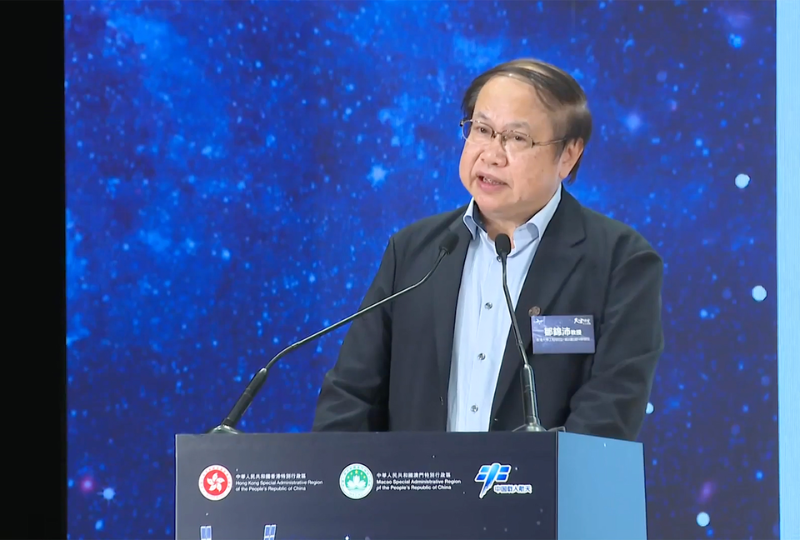
Dr Lai Ka-ying’s doctoral thesis was supervised by Dr Chow Kam-pui from HKU’s School of Computing and Data Science.
(Image courtesy of ‘Tiangong Class’ Hong Kong and Macao Designated Session)
Beyond talent cultivation, HKU remains steadfast in its dedication to advancing national aerospace initiatives through frontier research. In 2025, HKU established the Hong Kong Institute for Astronomy and Astrophysics as an international centre of research excellence, providing a platform for global collaboration and a central hub for astronomers across Hong Kong and the Greater Bay Area.
The University’s ongoing contributions to Mars and lunar exploration missions – notably the development of the ‘Short-Wavelength Infrared Spectrometer’ for the Tianwen-3 mission and the pioneering analysis of lunar soil samples from Chang’e-5 and Chang’e-6 – underscore HKU’s strategic alignment with the National 15th Five-Year Plan. Together, these efforts affirm HKU’s commitment to supporting national efforts to achieve technological self-reliance and the strategic goal of accelerating the nation’s development into a leading aerospace power.
The University looks forward to learning of more stellar accomplishments and discoveries by the Shenzhou-23 crew and to welcoming them back home after a safe and successful mission.
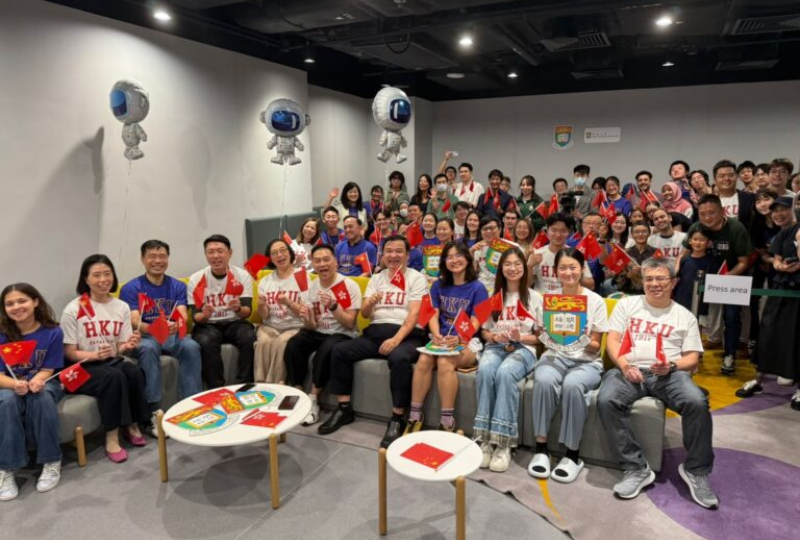
HKU students and colleagues gathered at the Jockey Club Student Village IV in Wong Chuk Hang to watch the successful launch of the Shenzhou-23 manned spacecraft via live broadcast.
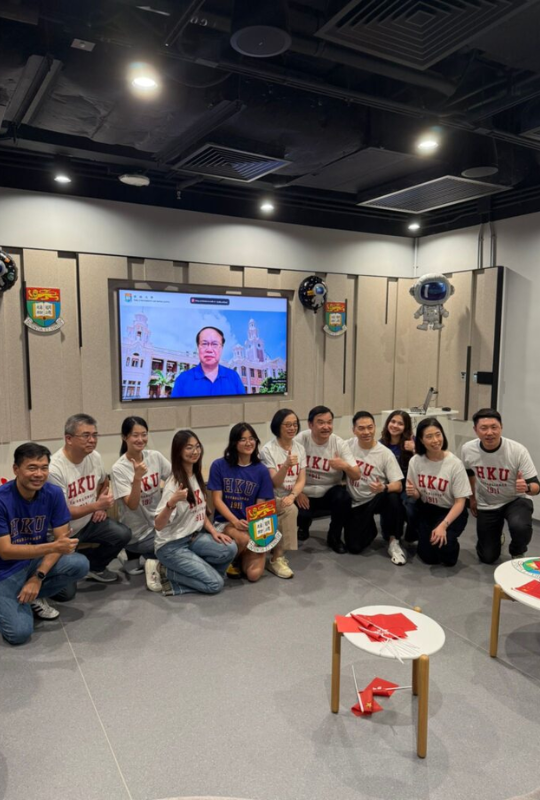
Dr Chow Kam-pui, Dr Lai Ka-ying’s PhD supervisor and Honorary Associate Professor at HKU’s School of Computing and Data Science, also joined the event via live broadcast.
This article was originally published in Keynotes@HKU, May and September 2026 issue
Other Research & Achievements Stories
Achievements and Milestones
The University of Hong Kong celebrated the opening of Phase II of the HKU Zhangjiang Base in Shanghai, marking a major milestone in its Shanghai strategy. The new facilities strengthen HKU’s research, education and innovative presence in the Yangtze River Delta, offering state-of-the-art laboratories, teaching spaces and student facilities. Addressing the event, HKU President and Vice-Chancellor Professor Xiang Zhang highlighted the University’s commitment to integrating research, education and industry collaboration to nurture future-ready talent. Shortly after opening, the HKU Zhangjiang Base welcomed more than 500 students from around the world for the new academic year, offering hands-on research opportunities closely aligned with industry needs and supporting the development of a full-chain innovation ecosystem that combines research, education, and industrialisation.

Achievements and Milestones
The HKU Talent Forum and the Second Anniversary Celebration of the HKU Techno-Entrepreneurship Academy (TEA) in Qianhai brought together leaders from government, academia, industry and innovation sectors to discuss talent development and entrepreneurship in the AI era. HKU President and Vice-Chancellor Professor Xiang Zhang emphasised that universities should develop character, capability and wisdom, noting that asking the right questions is more important than simply accessing knowledge. Speakers highlighted the need to use AI as a tool while preserving human judgement and values. The event also celebrated TEA’s achievements in nurturing cross-border innovation, supporting 100 incubated projects and attracting significant investment, while strengthening Hong Kong-Shenzhen collaboration in research, talent, and entrepreneurship.
Natural Science
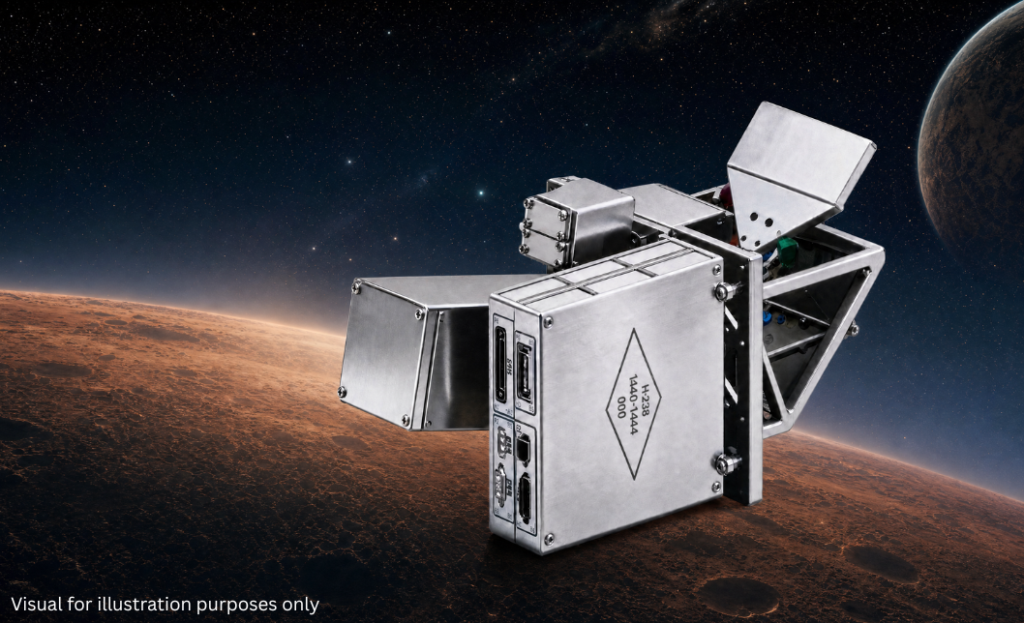
A ‘Short-Wavelength Infrared Spectrometer’ developed by a research team in the HKU Department of Earth and Planetary Sciences has been selected as a payload for China’s Tianwen-3 Mars Sample Return mission. The instrument will undertake critical scientific tasks – including the search for biosignatures, the detection of hydrous minerals, and support for landing site selection – thus – providing essential data that will contribute to addressing fundamental questions, including the uniqueness of life on Earth and the universality of biochemical mechanisms. Led by HKU in collaboration with leading Chinese Mainland research institutions, the spectrometer project highlights Hong Kong’s integration into the nation’s strategic advancement. Its selection not only demonstrates HKU’s continued breakthroughs in frontier research but also its contributions to advancing planetary science development and nurturing local innovation and technology talent.
Innovation and Technology
The Department of Electrical and Computer Engineering in the HKU Faculty of Engineering, together with the Centre for Advanced Semiconductors and Integrated Circuits, has developed the world’s first programmable neuromorphic hardware platform that can operate at temperatures approaching absolute zero, showcasing HKU’s research excellence in cryogenic electronics and quantum technologies. The research team has discovered an innovative way to enable a single transistor to mimic the energy-efficient spiking behaviour of biological neurons at temperatures down to 10 millikelvin. This greatly reduces the power consumption and thermal load of cryogenic control systems for quantum computers, providing a potential solution for large-scale quantum computing and quantum error correction. At the same time, this robust and scalable cryogenic chip technology supports complex local data processing in the extreme environments encountered in deep-space missions, strengthening humanity’s ability to explore the Moon and the outer reaches of our solar system.


