Innovation and Technology
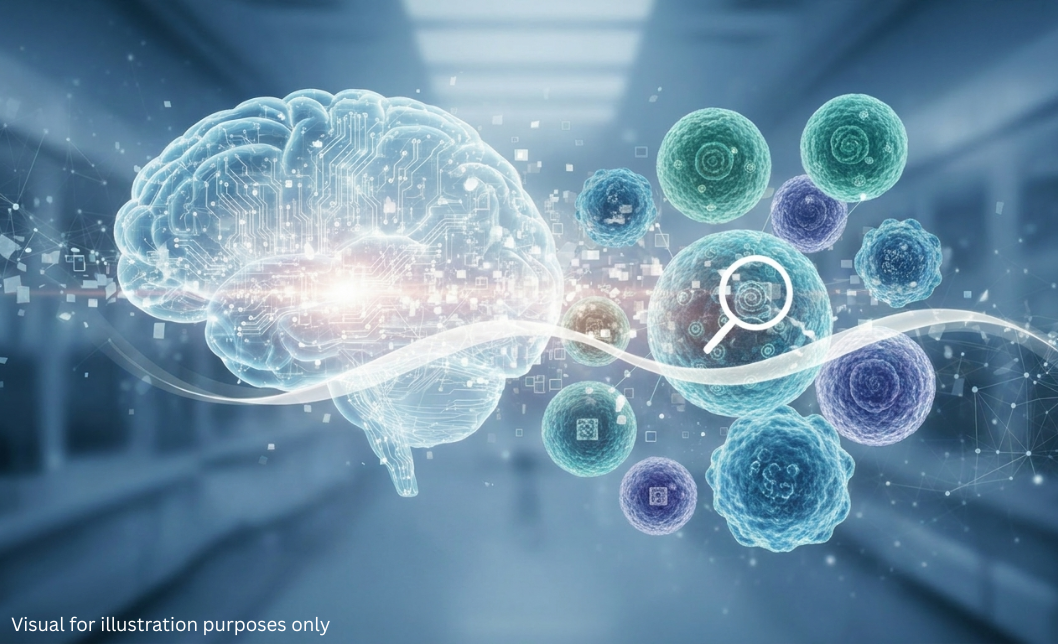
Cells contain a wealth of information about health and disease, but extracting that data reliably from microscope images remains a major challenge. Many important differences between healthy and diseased cells are too subtle to detect visually, while existing artificial intelligence (AI) tools that can identify such patterns often operate as “black boxes”, making their decisions hard to interpret.
A research team led by Professor Kevin Tsia, a professor from the Department of Electrical and Computer Engineering under the Faculty of Engineering and the Programme Director of the Biomedical Engineering Programme of the School of Biomedical Engineering at The University of Hong Kong (HKU), has developed a new AI framework, MorphoGenie, to help address both challenges.
MorphoGenie analyses images of individual cells to uncover subtle but meaningful patterns linked to their identity, state and behaviour. Unlike many conventional AI models, it is designed to be interpretable, helping researchers understand not only what the AI predicts, but also which visual features it uses to reach those conclusions.
The tool learns a small set of reusable visual building blocks from cell images, including cell size and shape, its broad internal texture, and its fine local details. These features can then be recombined to describe a wide range of cellular states and conditions.
Inspired by How Humans Learn
The concept behind MorphoGenie is rooted in a fundamental principle in AI, known as compositionality, which is central to human learning and communication. Humans do not learn every new object or situation from scratch, instead, we build understanding by combining reusable ideas.
MorphoGenie applies this idea to cell imaging. By learning a compact set of reusable morphological concepts directly from images, the system can interpret new and previously unseen cell data more effectively, without relying heavily on manual annotation or predefined assumptions.
“One of the long-term goals of AI is to build systems that learn from reusable concepts, rather than simply memorising patterns,” said Professor Kevin Tsia. “Humans do this naturally — we understand the world by combining simple ideas into more complex ones. MorphoGenie applies a similar principle to cell morphology, helping to make AI more transparent, adaptable and potentially more useful for future disease diagnostics.”
Unlocking Hidden Biological Insights
Cell morphology contains rich biological information, but much of it is difficult to quantify consistently through conventional analysis or visual inspection alone. Traditional methods often rely on manually designed features or extensive labelling, both of which can be time-consuming and prone to bias.
MorphoGenie offers a different approach. It learns directly from cell images without the need for manual labelling and organises complex image information into a compact, interpretable representation. This may support future efforts to classify cell states more objectively and discover biologically meaningful patterns that are not readily visible to the human eye.
In the study, the HKU team showed that MorphoGenie could distinguish major lung cancer cell subtypes, detect drug-induced changes in cell morphology, and track dynamic biological processes such as cell-cycle progression and epithelial-to-mesenchymal transition, which is closely linked to disease progression and metastasis.
“Cell images contain much richer information than what we can easily describe using conventional measurements alone,” said Dr Rashmi Sreeramachandra Murthy, the first author of the study. “By learning interpretable visual primitives, MorphoGenie helps reveal meaningful biological patterns that might otherwise remain hidden, while still allowing researchers to understand what the AI is using to interpret the data.”
Towards More Transparent AI for Biomedicine
A key strength of MorphoGenie is its ability to work across different kinds of microscopy techniques, including label-free quantitative phase imaging and fluorescence microscopy. It can also transfer what it has learned from one dataset to a new, unseen dataset. This suggests it could have broad value in biomedicine, including disease research, drug discovery, and studies of how cells respond to treatments.
The team believes MorphoGenie could help support the next generation of AI tools for biomedical discovery. As AI takes on more complex scientific tasks, there is growing interest in systems that not only detect patterns in data, but do so in ways that scientists can understand and check. By learning interpretable building blocks of cell morphology, MorphoGenie offers a more transparent approach to analysing biological images.
That could be especially important in biomedicine, where trust, reproducibility and scientific insight are essential. In the future, approaches like this may help researchers use AI to spot meaningful patterns, compare biological states and guide new research questions, while keeping human expertise at the centre of the discovery process.
“Interpretability is important not only for trust, but also for scientific usefulness,” said Prof. Tsia. “If AI is to help researchers find meaningful changes in cells, its findings need to be presented in a way that people can understand and verify.”
While fully autonomous biomedical discovery remains a longer-term ambition, MorphoGenie lays the important foundations for AI systems that are both more powerful and more transparent, ultimately advancing our understanding of health and disease.
Link to the Nature Communications research:
https://www.nature.com/articles/s41467-025-66267-w
About Professor Kevin Tsia
Kevin Tsia is currently a Professor in the Department of Electrical and Electronic Engineering and the Programme Director of the Biomedical Engineering Program at The University of Hong Kong. His research interest covers a broad range of subject matters including ultra-fast optical imaging for imaging flow cytometry and high-speed in-vivo brain imaging, bioinformatics approaches for single-cell analysis. He is SPIE Fellow, and the HK Research Grants Council (RGC) Research Fellow (2020). He received Early Career Award 2012-2013 by RGC in Hong Kong. He also received the Outstanding Young Research Award 2015 at HKU as well as 14th Chinese Science and Technology Award for Young Scientists in 2016. He holds 11 granted and pending US patents on ultrafast optical imaging technologies. He is a co-founder of start-up company commercializing the high-speed microscopy technology for cancer screening and treatment monitoring applications. It was among the top 10 finalists in Falling Walls Venture in 2019, and awarded as Google Cloud Startup in 2024.
Other Research & Achievements Stories
Achievements and Milestones
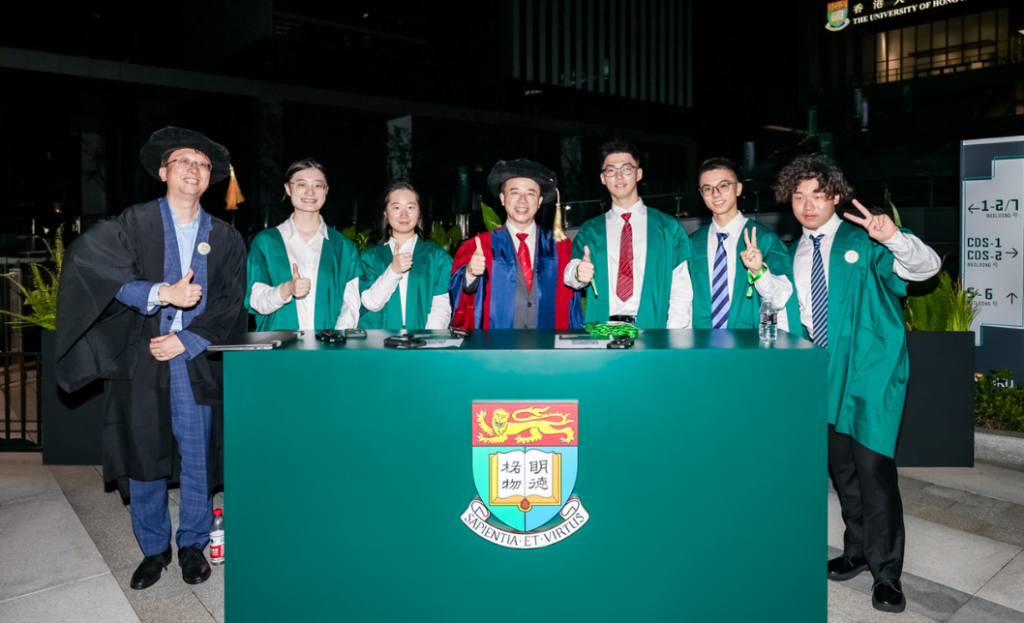
The University of Hong Kong celebrated the opening of Phase II of the HKU Zhangjiang Base in Shanghai, marking a major milestone in its Shanghai strategy. The new facilities strengthen HKU’s research, education and innovative presence in the Yangtze River Delta, offering state-of-the-art laboratories, teaching spaces and student facilities. Addressing the event, HKU President and Vice-Chancellor Professor Xiang Zhang highlighted the University’s commitment to integrating research, education and industry collaboration to nurture future-ready talent. Shortly after opening, the HKU Zhangjiang Base welcomed more than 500 students from around the world for the new academic year, offering hands-on research opportunities closely aligned with industry needs and supporting the development of a full-chain innovation ecosystem that combines research, education, and industrialisation.

Achievements and Milestones
The HKU Talent Forum and the Second Anniversary Celebration of the HKU Techno-Entrepreneurship Academy (TEA) in Qianhai brought together leaders from government, academia, industry and innovation sectors to discuss talent development and entrepreneurship in the AI era. HKU President and Vice-Chancellor Professor Xiang Zhang emphasised that universities should develop character, capability and wisdom, noting that asking the right questions is more important than simply accessing knowledge. Speakers highlighted the need to use AI as a tool while preserving human judgement and values. The event also celebrated TEA’s achievements in nurturing cross-border innovation, supporting 100 incubated projects and attracting significant investment, while strengthening Hong Kong-Shenzhen collaboration in research, talent, and entrepreneurship.
Achievements and Milestones
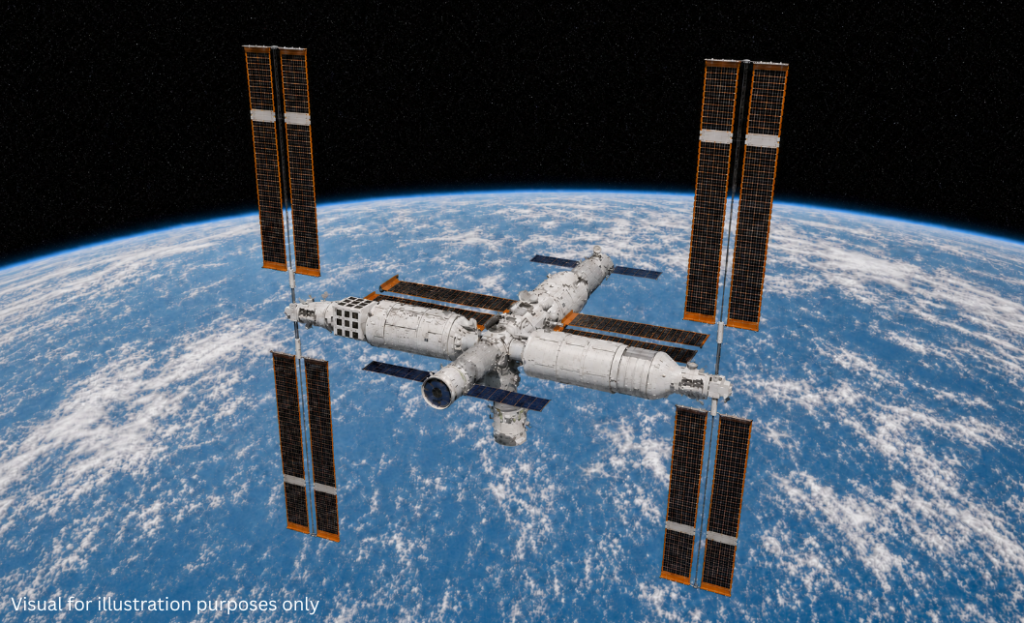
HKU alumna Dr Lai Ka-ying becomes the first from HKU and Hong Kong to join a national manned space mission as a payload specialist. Having spent close to four months in orbit, Dr Lai hosted the ‘Tiangong Class’ via a live broadcast from China's Tiangong Space Station. Through real-time interaction between space and Earth, she shared knowledge of space science and her experiences as an astronaut with teachers and students in Hong Kong and Macau, inspiring the next generation to explore the unknown. Holding Bachelor of Science in Computer Science and Information Systems, MPhil, and PhD (Computer Science) degrees from HKU, Dr Lai’s expertise in data processing, algorithms, and cybersecurity highlights the increasingly important role of advanced computing in modern space missions. Her journey from campus laboratories to the Tiangong space station demonstrates how HKU equips world-class talent with both technical excellence and resilience. HKU continues to advance frontier aerospace…
Natural Science
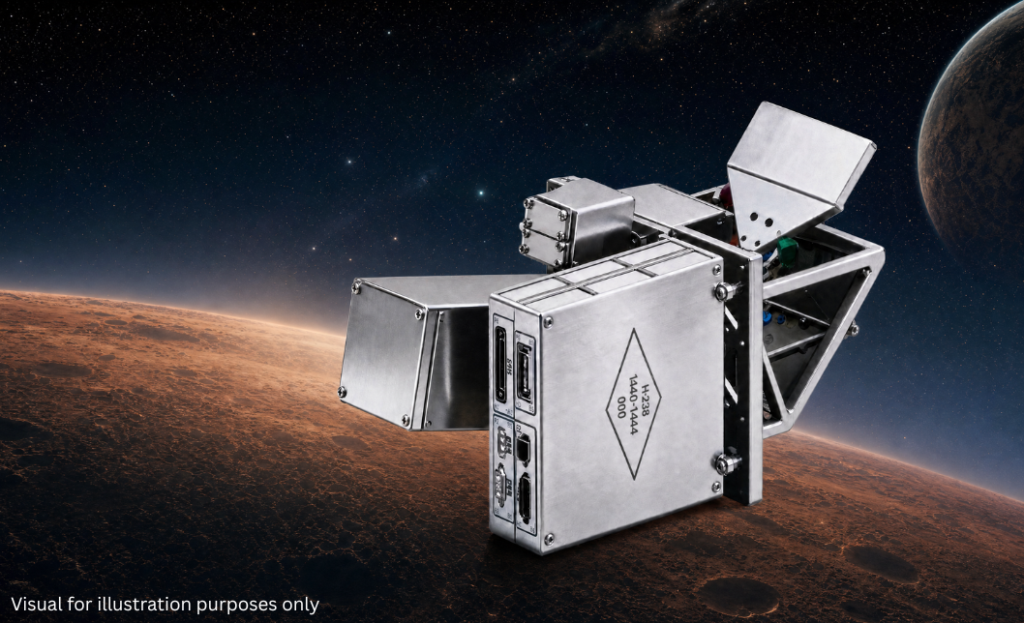
A ‘Short-Wavelength Infrared Spectrometer’ developed by a research team in the HKU Department of Earth and Planetary Sciences has been selected as a payload for China’s Tianwen-3 Mars Sample Return mission. The instrument will undertake critical scientific tasks – including the search for biosignatures, the detection of hydrous minerals, and support for landing site selection – thus – providing essential data that will contribute to addressing fundamental questions, including the uniqueness of life on Earth and the universality of biochemical mechanisms. Led by HKU in collaboration with leading Chinese Mainland research institutions, the spectrometer project highlights Hong Kong’s integration into the nation’s strategic advancement. Its selection not only demonstrates HKU’s continued breakthroughs in frontier research but also its contributions to advancing planetary science development and nurturing local innovation and technology talent.


